
Last updated November 14, 2026
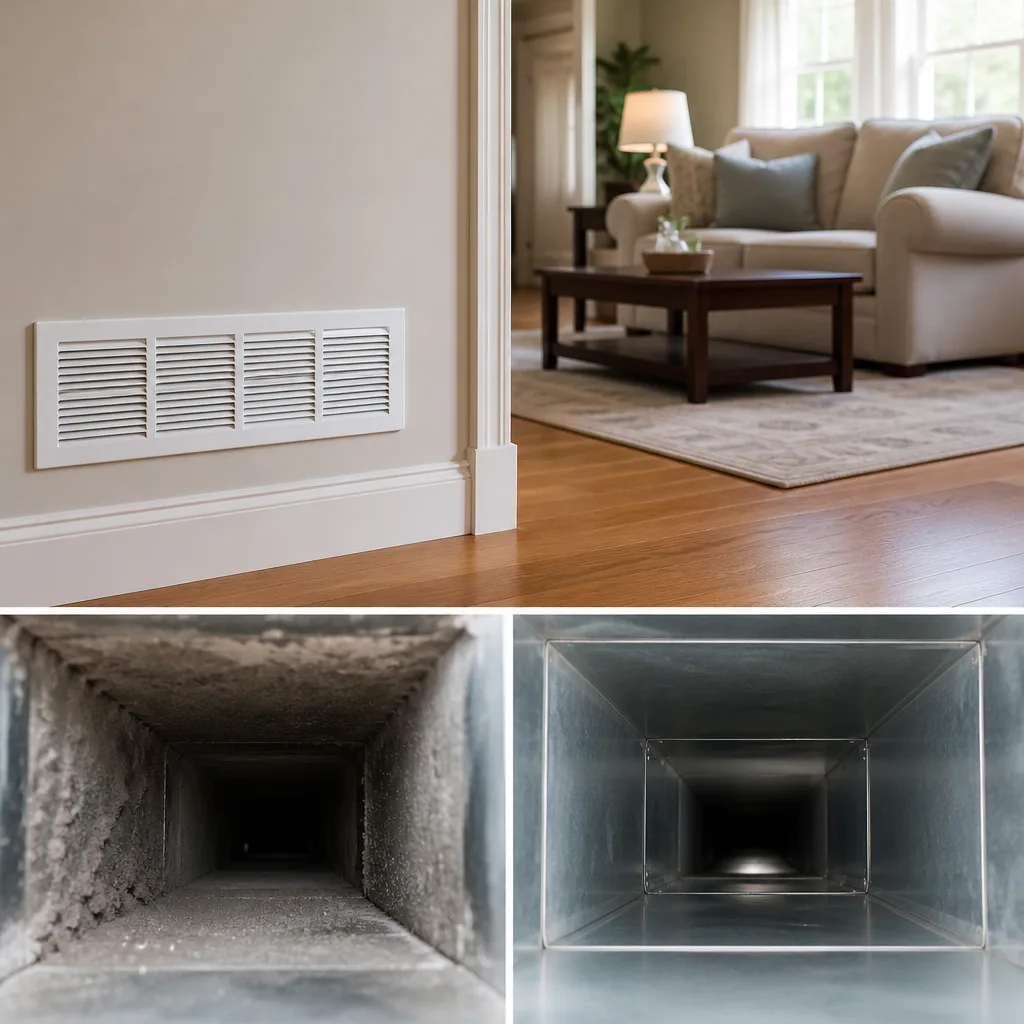 Whole-home duct cleaning
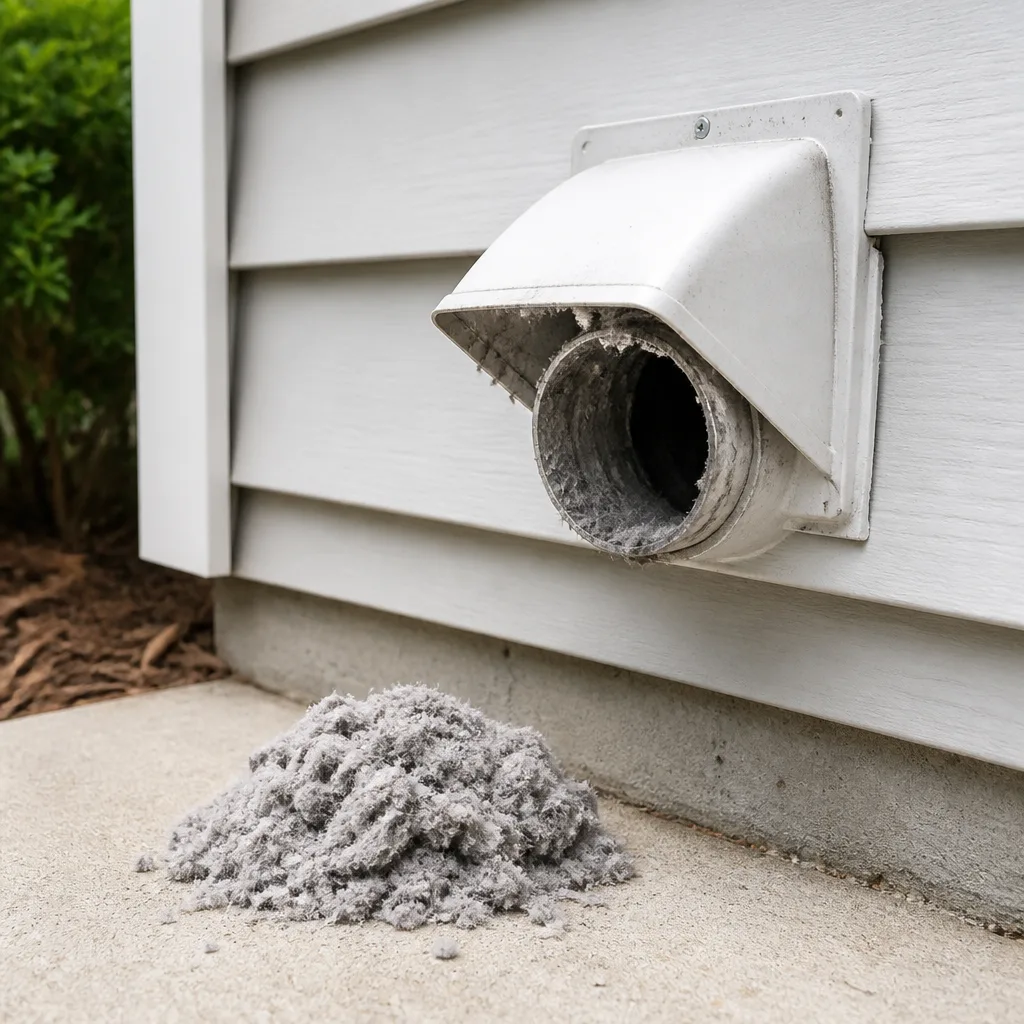 Dryer vent cleaning
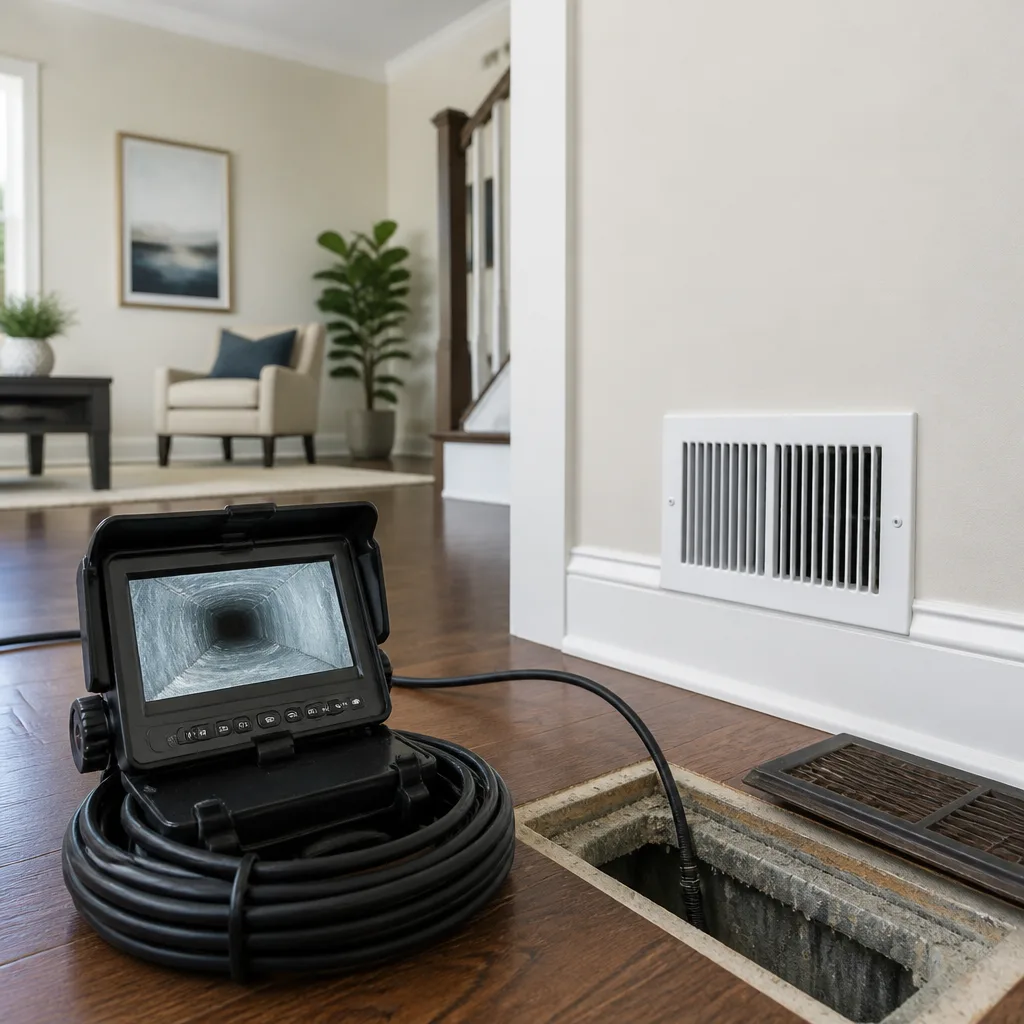 Camera inspection
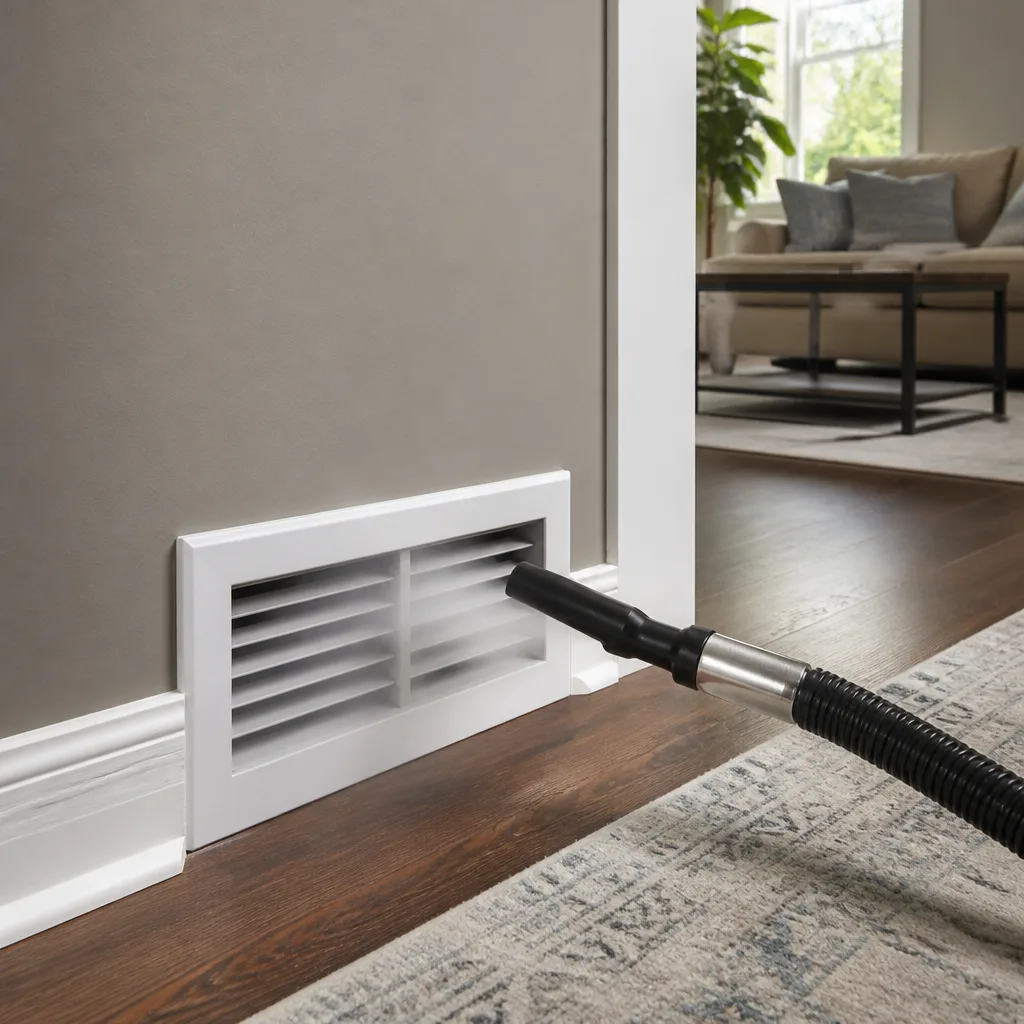 Sanitizing & deodorizing
Whole-system duct and dryer vent check with before-and-after photos - you see exactly what came out of your vents
That "$99 whole-house special" is a bait ad - the real number appears once they are in your hallway, or the "clean" is a shop-vac at the register. We photograph the inside of your ducts before and after instead.
Air Duct Cleaning Permits, Codes & Inspections in Everett, WA: What You Need to Know
Duct cleaning is unregulated. Duct repair is not. That’s the line most homeowners never hear about until something goes wrong, and it gets crossed more often than contractors like to admit. In Washington State, work that modifies ductwork without the right licensing or permits can put your homeowner’s insurance coverage on HVAC-related claims in question. This guide walks through the actual rules: what a permit-free cleaning job looks like, when a repair or modification crosses into mechanical permit territory under WAC 51-52, which contractor license a crew must hold, how to check a license through the Department of Labor & Industries, and what paperwork to keep afterward. If you own or manage property in Everett, this is the regulatory picture you’re actually operating under.
Quick Answer
In Everett, WA, routine air duct cleaning generally does not require a permit. Duct repair or modification, meaning work that opens a duct wall, replaces duct sections, or changes an air handler connection, can fall under mechanical permit requirements in Washington (WAC 51-52), and the contractor doing that work must hold a specialty contractor license with the Department of Labor & Industries, not just a business license. Cleaning is unregulated; repair is regulated. Keep written documentation of any repair work for insurance and resale.
Styles & brands we work with
- Whole-home duct cleaning
- Dryer vent cleaning
- Camera inspection
- Sanitizing & deodorizing
Table of Contents
- Cleaning vs. Repair: Where the Regulatory Line Sits
- WAC 51-52 and What a Mechanical Permit Actually Covers
- Everett Permit Thresholds: When Duct Work Needs a Permit
- Contractor Licensing in Washington: What a Valid Crew Must Hold
- How to Verify a Contractor Through Labor & Industries
- Documentation to Keep After Duct Work
- What an Inspection Looks Like and Who Performs It
- Why This Matters for Your Insurance and Your Resale
Cleaning vs. Repair: Where the Regulatory Line Sits
Washington doesn’t license duct cleaners. There is no state credential, no test, no inspection requirement for sending a rotating brush through a residential duct run and pulling out the debris. That’s why a crew can offer cleaning with nothing more than a business license and a machine. It’s also why the price range on cleaning is so wide and the quality so inconsistent.
Repair is a different animal. The moment a technician cuts into a duct wall, replaces a section of rigid trunk line, reconnects a takeoff, or touches the connection at the air handler, the work enters the territory of mechanical alterations. Under Washington’s mechanical code, adopted through WAC 51-52, those alterations can require a mechanical permit issued by the local jurisdiction. Everett issues those permits through its own building department, not the state.
Here’s the practical problem. A duct cleaning crew that finds a crushed flex run behind a soffit and “just fixes it while we’re here” has moved from an unregulated service into regulated construction. If that crew doesn’t hold the right specialty contractor license, the work can be performed outside the law, and you’re the one holding the consequences on an insurance claim or a home sale. In our experience, the crossover happens quietly and often. Most homeowners never know it occurred until a lender, an adjuster, or a buyer’s inspector starts asking questions.
So the first question to ask any crew isn’t “how much per vent.” It’s “do you repair ducts, and under what license.” That answer tells you whether you’re hiring a cleaning outfit or a contractor.
WAC 51-52 and What a Mechanical Permit Actually Covers
WAC 51-52 is Washington’s adoption of the mechanical code that governs installation, alteration, repair, and replacement of mechanical systems, including ductwork. It doesn’t say “every duct needs a permit.” It sets thresholds, and those thresholds are what matter for a residential job in Everett.
Broadly, the code is concerned with changes that affect the mechanical system as a system. That means:
- Replacing a run of duct with a different size, routing, or material than what’s there.
- Adding a new takeoff, register, or branch that changes airflow distribution.
- Altering the connection at the furnace or air handler, which can affect the equipment’s rated operation.
- Cutting into a fire-rated assembly or a duct passing through a rated wall, which pulls in separate requirements.
Routine cleaning, sealing a visible leak at a joint with mastic, or re-taping a loose connection generally is not a mechanical alteration in the permit sense. But “generally” is doing real work in that sentence, and a contractor who tells you otherwise without looking is guessing.
What’s often left out of the conversation, and what matters here, is that abatement of contaminated duct material and replacement of failed sections can involve the same physical steps as a mechanical alteration. Whether a permit is triggered depends on what’s actually being done, not what the invoice calls it. If a company’s scope of work includes air duct repair, that’s a sign it understands the difference and carries the licensing to match. Cleaning-only companies that walk past a collapsed section aren’t doing you a favor.
Where the code is specific, the safe move is to ask the contractor directly: does this job require a permit in Everett, and who is pulling it. A legitimately licensed company answers without flinching.
Everett Permit Thresholds: When Duct Work Needs a Permit
Everett’s building department administers mechanical permits locally. For a single-family home, the practical threshold is this: if the work replaces or alters ductwork in a way that changes the system’s design, a mechanical permit is typically required. If the work is a straight cleaning, no permit. The gray zone is repair, and that’s where most of the confusion lives.
Consider what duct repair actually looks like in aging Everett housing stock. A lot of the city’s older homes have original or semi-original duct systems: rigid galvanized trunk lines, some with hand-cut takeoffs, some with flex added during later remodels. Over time, joints separate, sections crush behind drywall, and the connections at the plenum fail. If a company’s response is to reconnect the run, replace the failed section, or reseal the trunk, that’s a mechanical alteration in most cases. If the response is to re-tape a joint, that’s maintenance.
The permit question isn’t about paperwork for its own sake. A mechanical permit triggers an inspection, and the inspection is the check that the repair was done to code rather than to what looked good at the time. When a homeowner sells, buyers and their inspectors ask about it. Lenders ask about it. And when an insurance claim touches the HVAC system, the adjuster asks whether the work was permitted.
The local climate matters here in a way it doesn’t in drier parts of the state. Everett’s wet winters mean heating systems run long hours, and the ductwork spends months moving warm, moist air through a system with temperature swings on both ends. That cycle is hard on joints and seals. It’s part of why duct repair comes up in this market, and part of why the repair-versus-cleaning distinction isn’t academic.
If you’re unsure whether your job crosses the line, the cheapest move is a phone call to the city’s building department before work begins. The second-cheapest is to hire a contractor who already knows the answer.
Contractor Licensing in Washington: What a Valid Crew Must Hold
Any crew performing duct repair in Washington must hold a specialty contractor license registered with the Department of Labor & Industries. A business license alone doesn’t cover it. Neither does a general contractor’s license if the work is mechanical in nature. The specialty license is the credential tied to the class of work.
What separates a licensed repair contractor from a cleaning crew isn’t paperwork. It’s scope. A company that performs air duct repair as a core service has built licensing, equipment, and process around the fact that it’s doing construction work inside your home’s mechanical system. A company that cleans ducts and occasionally “fixes” something along the way is doing neither job properly.
The equipment story tracks the same line. Professional-grade systems, like Rotobrush machines that combine mechanical brushing with real-time camera inspection, or Nikro HEPA vacuum equipment built on the negative-pressure principle used in professional remediation, are the tools of a contractor who expects work to be verifiable. A shop vac and a brush can move dust. It can’t confirm what’s left behind, and it can’t handle contamination the way remediation-grade containment does. Abatement Technologies equipment extends that capability further, to jobs where the air quality situation is more than routine dust.
The same principle applies to hardware. When a system needs filtration upgrades after cleaning, working across brands like Honeywell, Aprilaire, or Guardsman matters because the filter has to match the equipment. It’s a small detail that separates a one-call resource from a company that does one thing.
The question for the homeowner is simple: is this company licensed and set up to repair the duct if repair is what the job needs, or is it going to clean and walk away?
How to Verify a Contractor Through Labor & Industries
Verifying a contractor’s license in Washington takes a few minutes and costs nothing. The Department of Labor & Industries maintains a public contractor lookup that shows license status, the license class, the expiration date, and any bond or insurance information on file. Do it before work begins, not after.
Here’s the sequence:
- Get the contractor’s exact legal business name, not the trade name.
- Look the business up in L&I’s online contractor verification tool.
- Confirm the license is active, not expired or suspended.
- Confirm the license class matches the work being quoted. Duct repair needs a specialty contractor license tied to mechanical work.
- Confirm the bond and insurance on file are current.
- Ask for the license number in writing on the estimate, so there’s no ambiguity about who’s performing the work.
Two things trip people up. First, a business license from the state Department of Revenue is not a contractor license. They’re different registrations and one doesn’t substitute for the other. Second, a license in one class doesn’t authorize work in another. A contractor licensed for general construction isn’t automatically licensed for mechanical alterations, and vice versa.
If the contractor can’t produce a license number or pushes back on the request, that’s the answer you need. Move on.
Documentation to Keep After Duct Work
Whatever paperwork exists after a duct job is the paperwork you’ll be reaching for in five or ten years when you sell the house or file a claim. Most homeowners keep nothing. That becomes a problem the moment someone asks for it.
Here’s what to keep, and why:
- The written estimate and final invoice. These establish scope: what was cleaned, what was repaired, what was replaced. Without them, a later question about a repair you can’t document becomes a question about undocumented work.
- The permit number and inspection record, if a permit was pulled. This is the single most useful document in a resale file because it proves the work was inspected.
- The contractor’s license number, as printed on the invoice. This is the paper trail that ties the work to a licensed company.
- Before-and-after photos. Camera-verified work leaves a visual record. Ask for yours.
- Any documentation of the repair itself, including what failed and how it was corrected. This helps the next technician and any inspector who looks at the system later.
The point isn’t to build a file cabinet. It’s that duct repair inside a wall is invisible once the job is done. If you ever have to prove the work was done correctly, the documents are the only evidence left.
What an Inspection Looks Like and Who Performs It
When a permit is pulled for a mechanical alteration in Everett, the city’s building department performs the inspection. It’s not the contractor inspecting their own work. That’s the whole point of the permit process, and it’s the reason a licensed contractor with a strong local reputation won’t object to pulling one when it’s required.
The inspection itself focuses on the mechanical installation: whether the duct sections are properly supported, whether connections are sealed to code, whether the alteration affects the system’s operation in a way that creates a hazard. A duct passing through a rated assembly gets scrutinized for fire-blocking and material compatibility. It isn’t a “kick the tires and sign” visit.
What the inspection doesn’t cover is cleaning quality. Nobody inspects whether a duct was cleaned thoroughly, because cleaning is unregulated. That’s why camera verification is the only real proof on the cleaning side. When a crew uses Rotobrush equipment with real-time camera inspection, the homeowner sees the before-and-after on a screen during the job. That’s not a substitute for an inspection. It’s the check that exists in the one part of this work that nobody else verifies.
Our cameras have caught plenty of breaches, collapsed sections, and failed connections that a visual walkthrough would have missed. On a job where a permit applies, that same evidence helps the inspector and the homeowner agree on what was actually done.
Why This Matters for Your Insurance and Your Resale
Homeowner’s insurance policies typically require that work on the home be performed by licensed professionals and, where required, permitted and inspected. When an HVAC-related claim comes up and the adjuster discovers that the duct repair triggering it was performed by an unlicensed crew without a permit, the coverage question gets much harder to answer. Policies vary, and this isn’t legal advice, but the pattern is consistent enough to matter.
Resale is where the same issue surfaces from a different direction. Buyers’ inspectors flag unpermitted mechanical work routinely, and a buyer’s lender can require that the work be brought up to code before closing. In the Seattle metro market, where disclosure and inspection are part of every transaction, an undocumented duct repair is a complication nobody wants at the negotiating table.
The fix is straightforward. Keep the paperwork. Verify the license. Ask about the permit before the work starts. Those three moves cover the exposure.
Common Mistakes to Avoid
- Assuming “licensed and insured” on hand means licensed for repair. A cleaning crew can be licensed and insured for cleaning and still not hold the specialty contractor license mechanical alterations require. Ask for the license class, not just the number.
- Letting the crew “fix it while they’re here” without asking about a permit. A quick repair during a cleaning sometimes crosses the permit threshold. Ask first, not after.
- Checking the license after the job is done. The verification step is only useful before work begins. Once the crew has packed up, the leverage is gone.
- Confusing a Department of Revenue business license with a contractor license. They’re separate registrations. One doesn’t substitute for the other anywhere in this state.
- Throwing away the estimate and invoice. They’re your proof of what was cleaned versus what was repaired, and they matter years later at resale and on insurance claims.
- Skipping the before-and-after documentation. Invisible work inside a wall is only as good as the record you keep of it. Camera-verified work leaves a record. A verbal “we cleaned it” doesn’t.
- Hiring on price alone when repair is part of the scope. A low quote that can’t legally perform the repair isn’t a bargain. It’s an uncovered liability sitting in your duct system.
See the difference
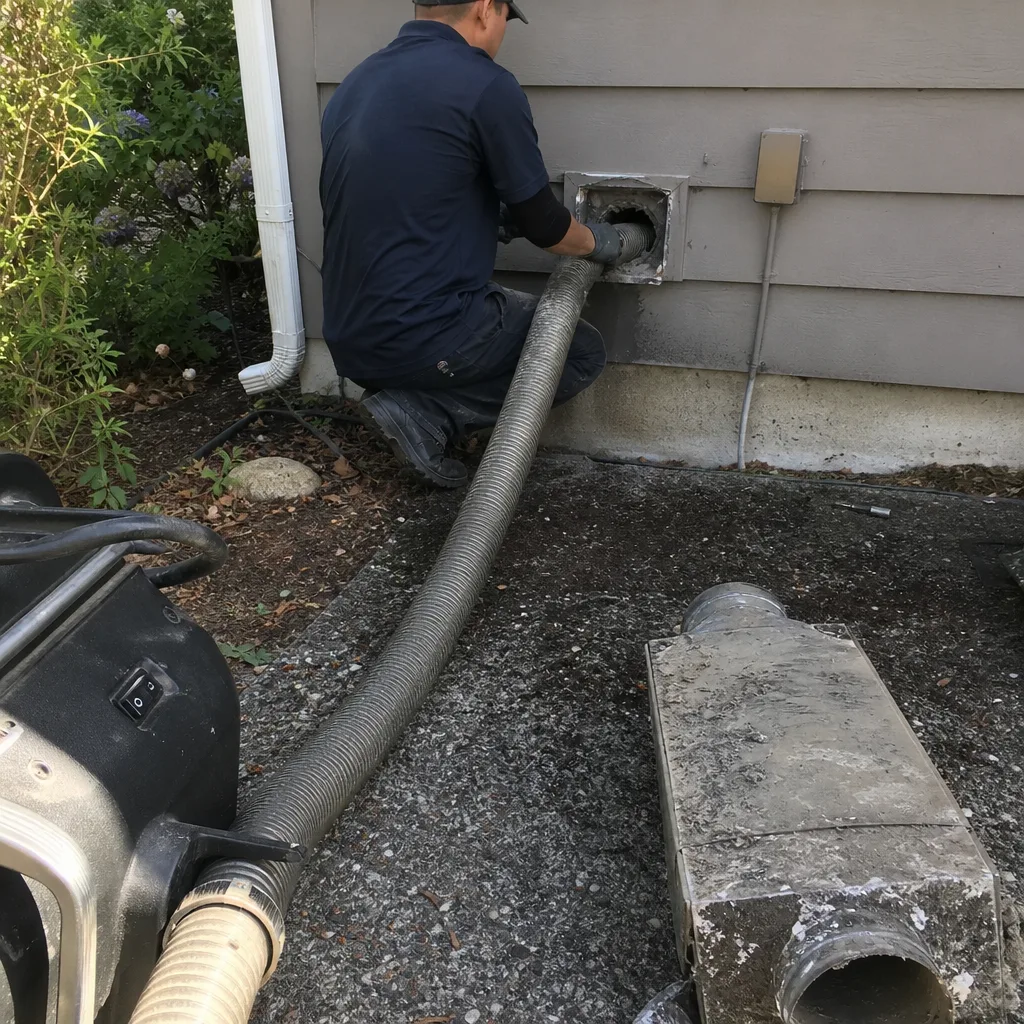 Before
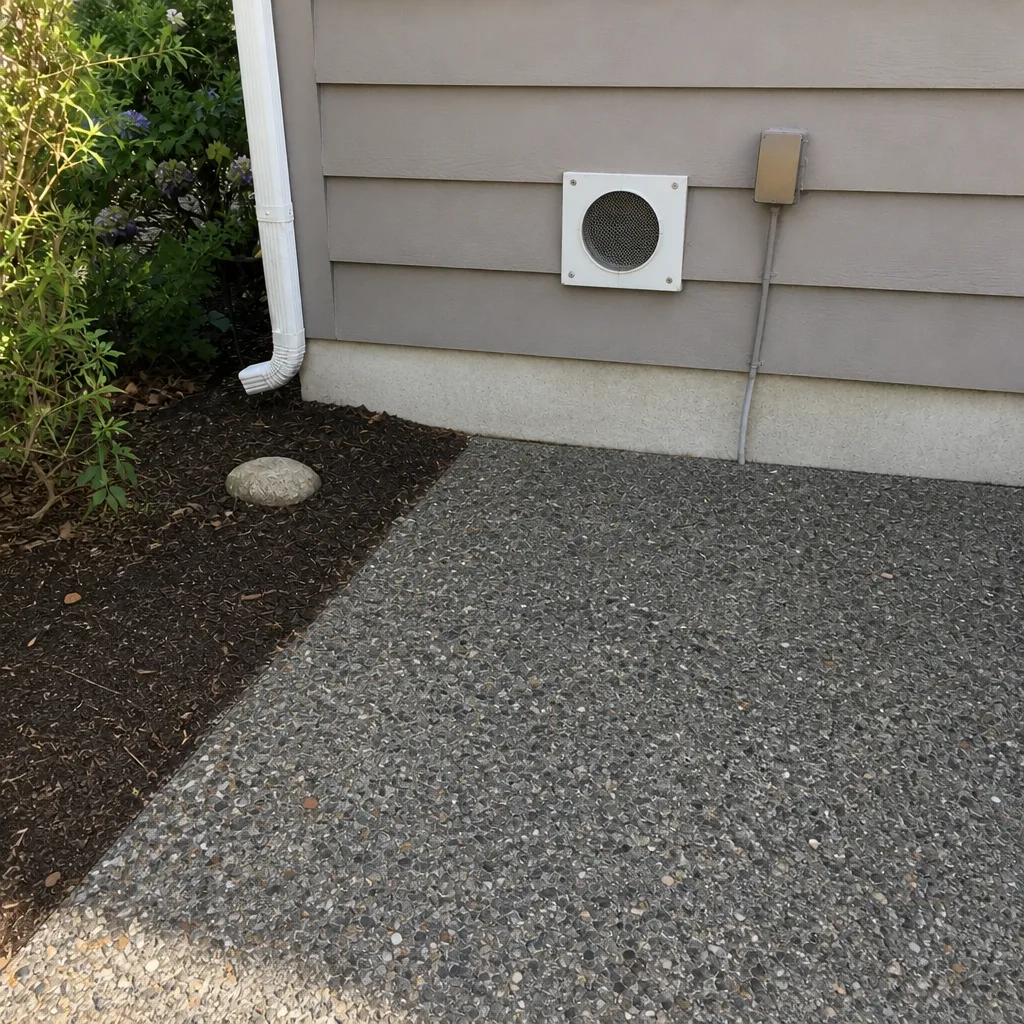 After
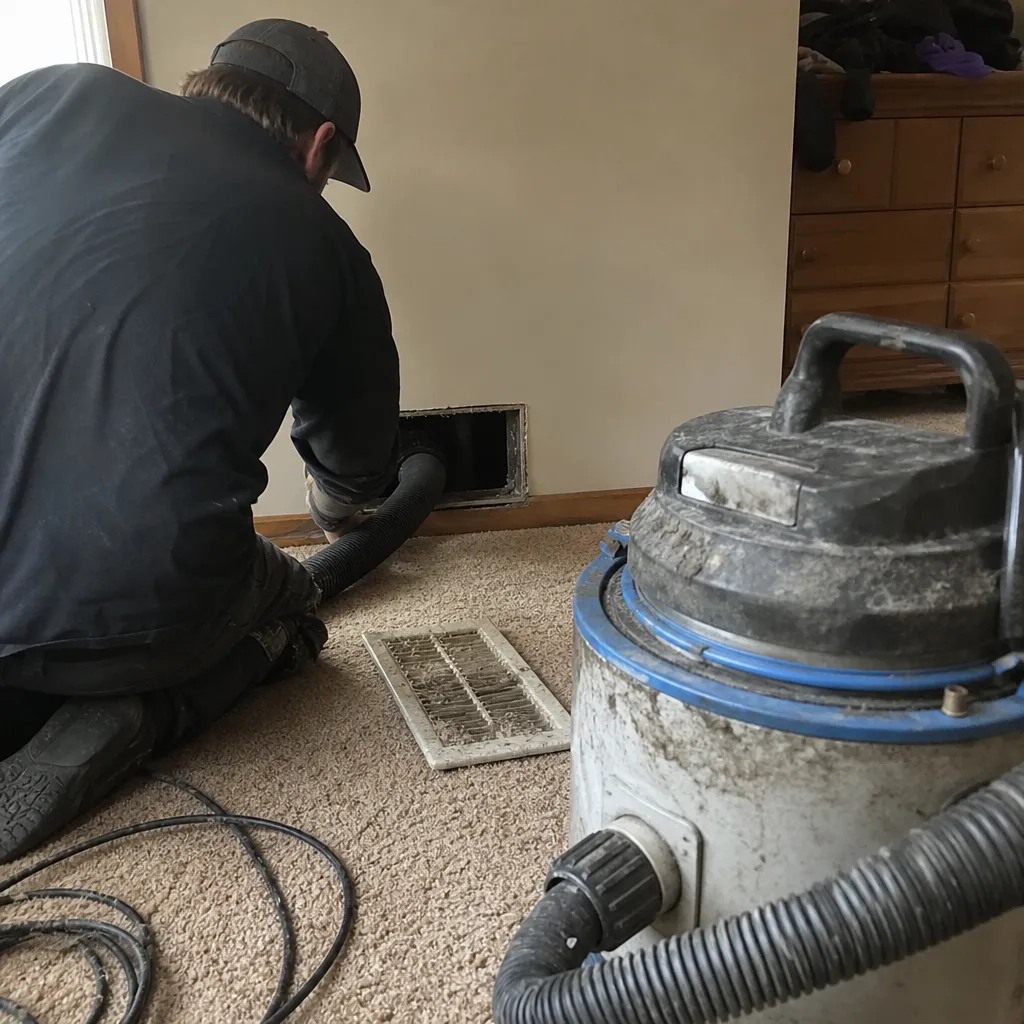 Before
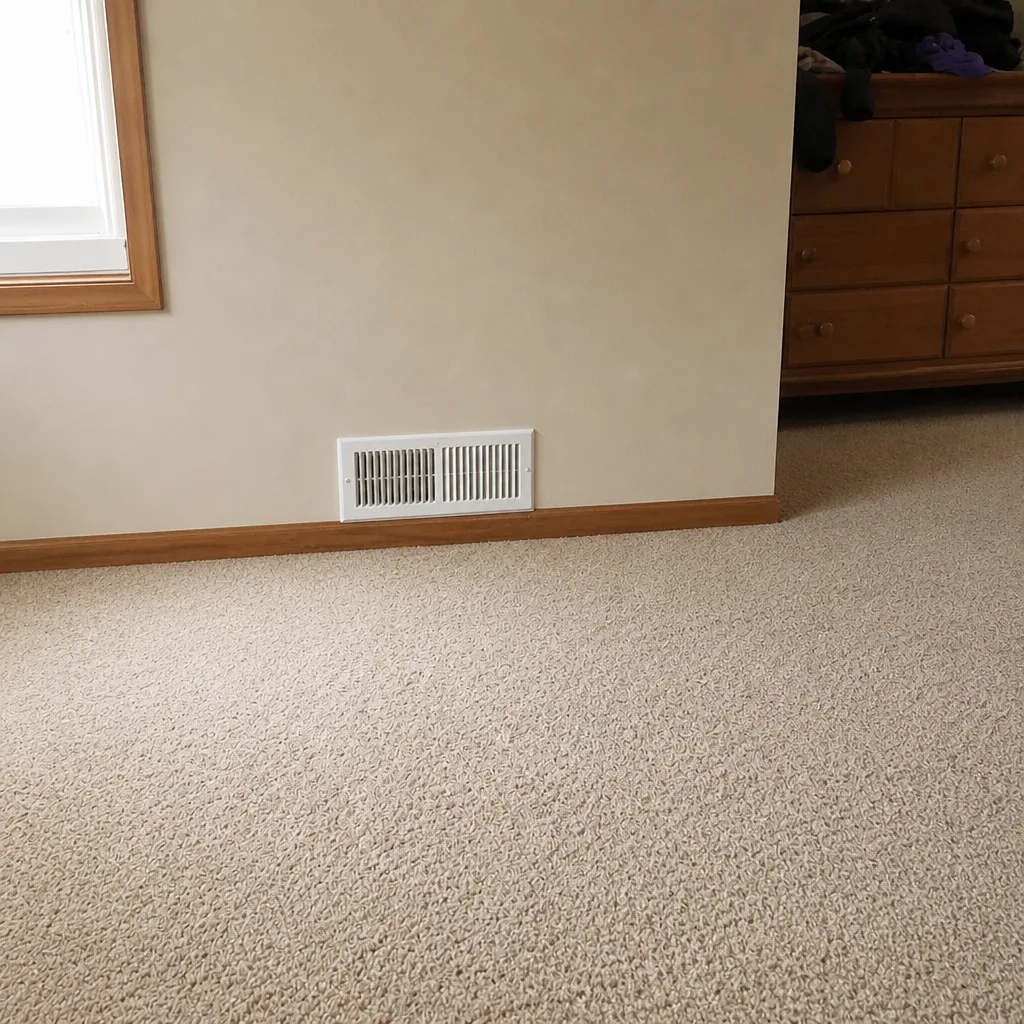 After
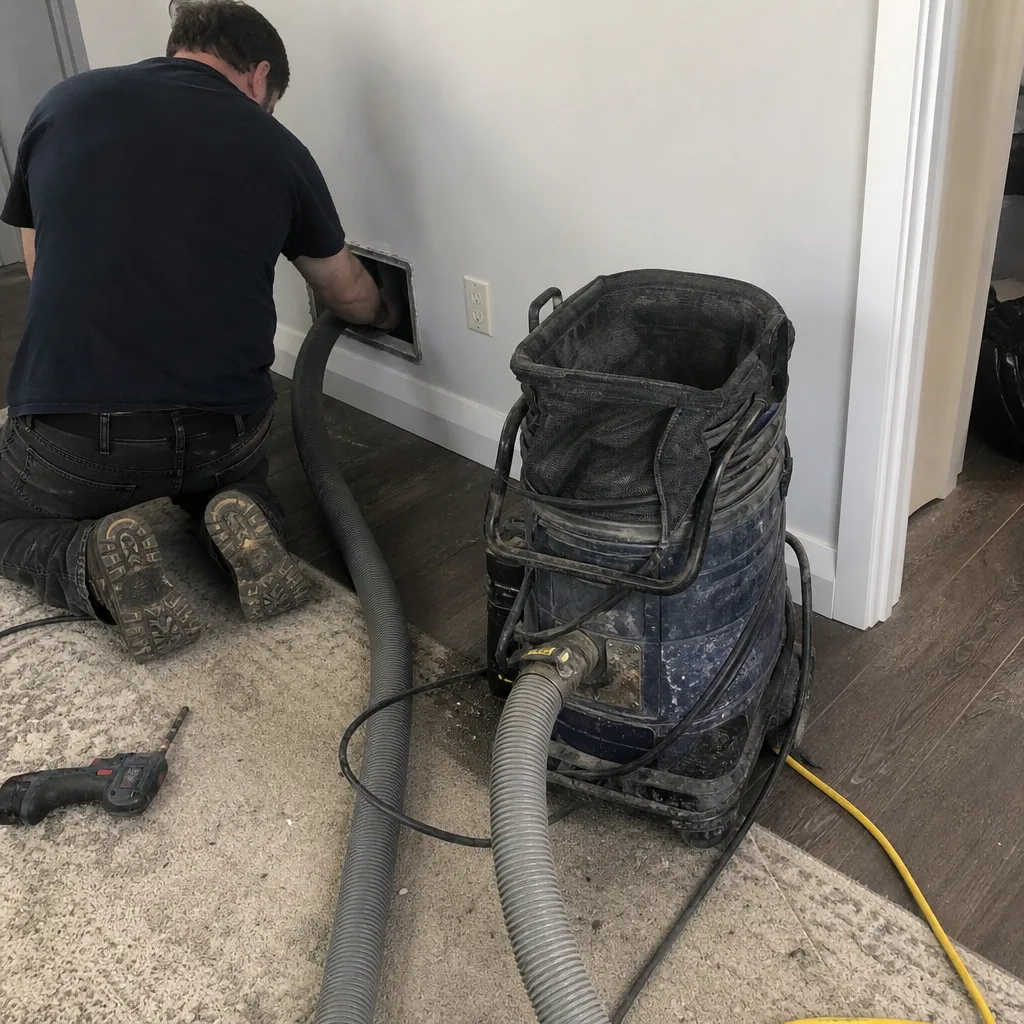 Before
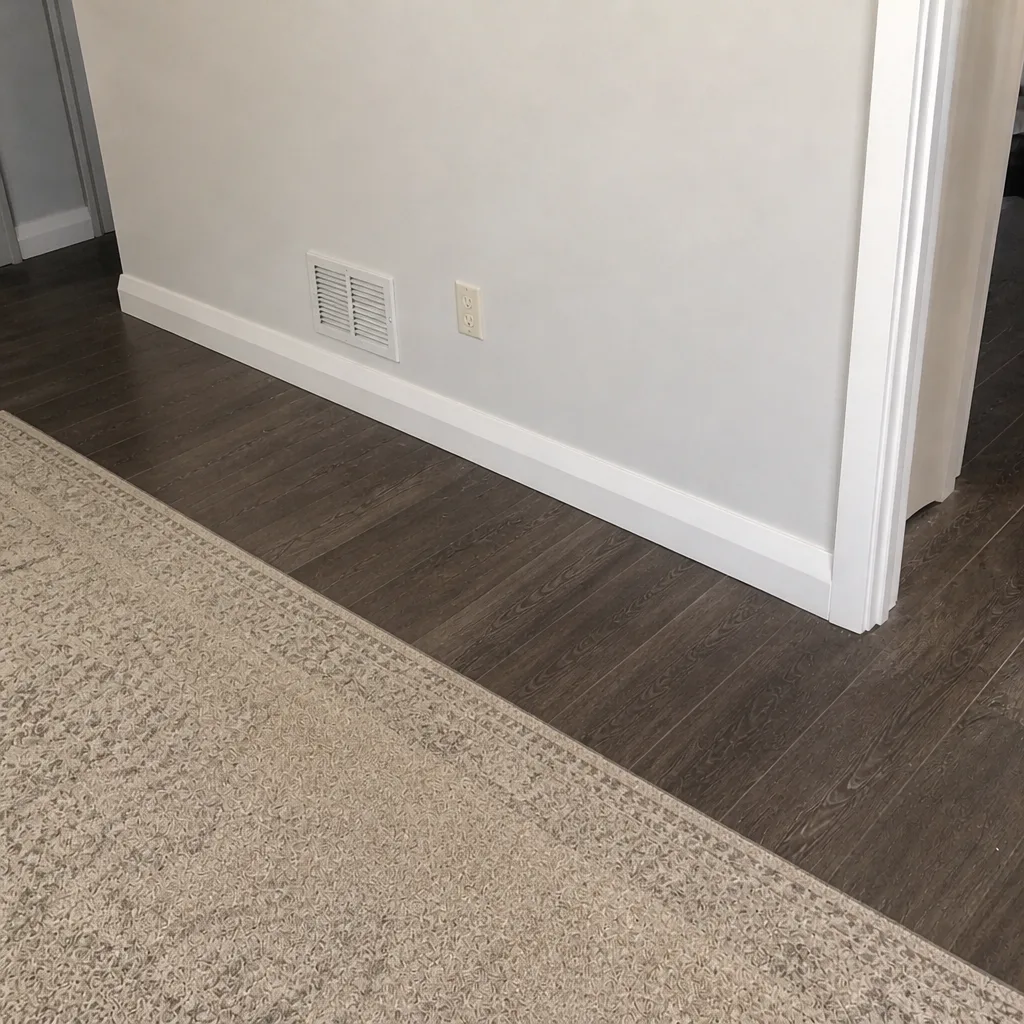 After
When to Call a Professional
Call a professional when the duct system has visible damage, persistent dust traces around registers, a collapse behind drywall, or a failed connection at the plenum. Call when a previous cleaning crew flagged something they said they couldn’t fix. Call when the system is moving less air than it used to, or when the air smells of dust or moisture, because those point to breaches a brush can’t correct. And call before you hire anyone for a repair, so you know whether a permit and a specialty license are in play.
Duct Cleaning Everett offers free estimates in Everett – call (833) 991-7936. We answer 24/7. Fast dispatch from 7am to 7pm, Sunday through Friday. We perform air duct cleaning, dryer vent cleaning, and air duct repair, and we work with the licensing and permit picture here because that’s what running a real repair operation requires. Ask us the licensing question first. We’ll give you the answer in writing.
Frequently Asked Questions
No. Routine air duct cleaning in Everett does not require a permit, because cleaning is not a mechanical alteration under Washington’s code. What can require a permit is duct repair or modification: opening a duct wall, replacing a section, or changing the connection at the air handler. If the scope includes repair, ask the contractor whether a mechanical permit applies before work begins. Call (833) 991-7936 for an exact quote on your job – estimates are free.
Yes. Duct repair that alters the mechanical system requires a specialty contractor license registered with the Department of Labor & Industries, not just a business license. The license class has to match the work. A crew legally licensed for cleaning isn’t automatically licensed for mechanical alterations, and the distinction matters for permits, inspections, and insurance. Call (833) 991-7936 to schedule a free estimate.
Look up the business’s legal name in the Department of Labor & Industries online contractor verification tool before work begins. Confirm the license is active, the class matches the scope, and the bond and insurance are current. Ask for the license number in writing on the estimate. If the company can’t produce it, don’t hire them. Call (833) 991-7936 and we’ll put ours on the estimate.
Usually because the low quote is priced for cleaning only and assumes no repair work, no camera verification, and no permit exposure. When a breach or collapsed section turns up mid-job, the cheap quote either stops there or the crew moves into repair work they aren’t licensed to perform. We give one flat price per system, agreed before work starts, with no per-vent pricing, and we confirm the work with camera inspection. Call (833) 991-7936 for an honest quote.
Camera inspection during and after cleaning is the only real answer, because nobody inspects cleaning quality for you. A Rotobrush system with real-time camera inspection lets you watch the result on screen as it happens rather than trusting a verbal assurance afterward. We use Nikro HEPA vacuum equipment to contain what gets dislodged, and we show before-and-after photos of your own ducts. Call (833) 991-7936 to book a free estimate.
There’s no fixed interval that fits every home, because it depends on the household, the pets, the filtration, and the condition of the duct system. What matters more is what the ducts look like when inspected and whether the system has visible breaches or failed connections. A camera inspection tells you more than any rule of thumb. Call (833) 991-7936 – estimates are free, and we’ll tell you what your system actually needs.
The Bottom Line
The rule of thumb for Everett homeowners: cleaning doesn’t need a permit, repair might, and the distinction is where liability lives. Verify a contractor’s license class through Labor & Industries before work begins. Ask directly whether the scope crosses into mechanical alteration and who is pulling the permit. Keep the estimate, the invoice, the license number, and the photos afterward, because invisible work inside a wall is only as reliable as the record you kept of it. A company set up to clean and repair, with professional-grade equipment and camera verification, can answer those questions confidently. A cleaning-only crew usually can’t.
Call Duct Cleaning Everett at (833) 991-7936 for a free estimate. We answer 24/7. Fast dispatch from 7am to 7pm, Sunday through Friday.
Written by the team at Duct Cleaning Everett, serving Everett.