
Last updated November 14, 2026
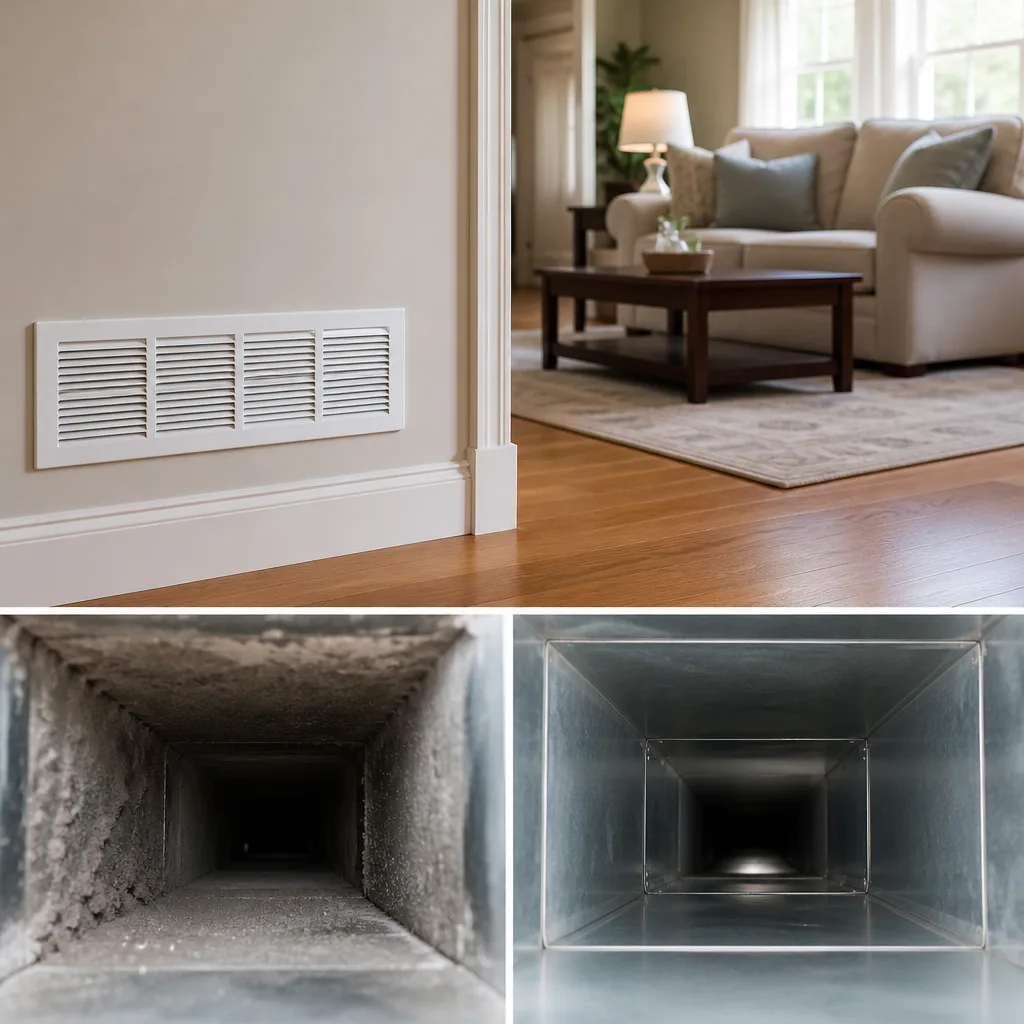 Whole-home duct cleaning
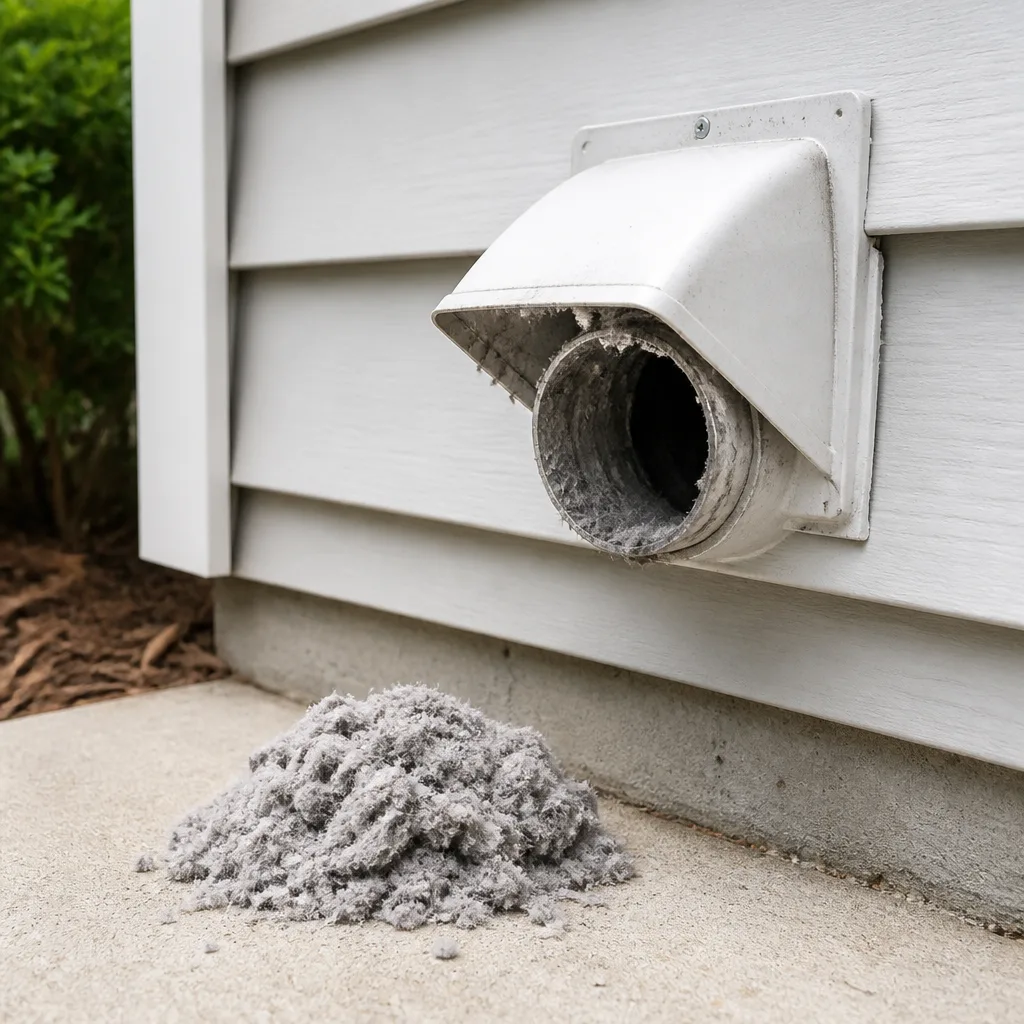 Dryer vent cleaning
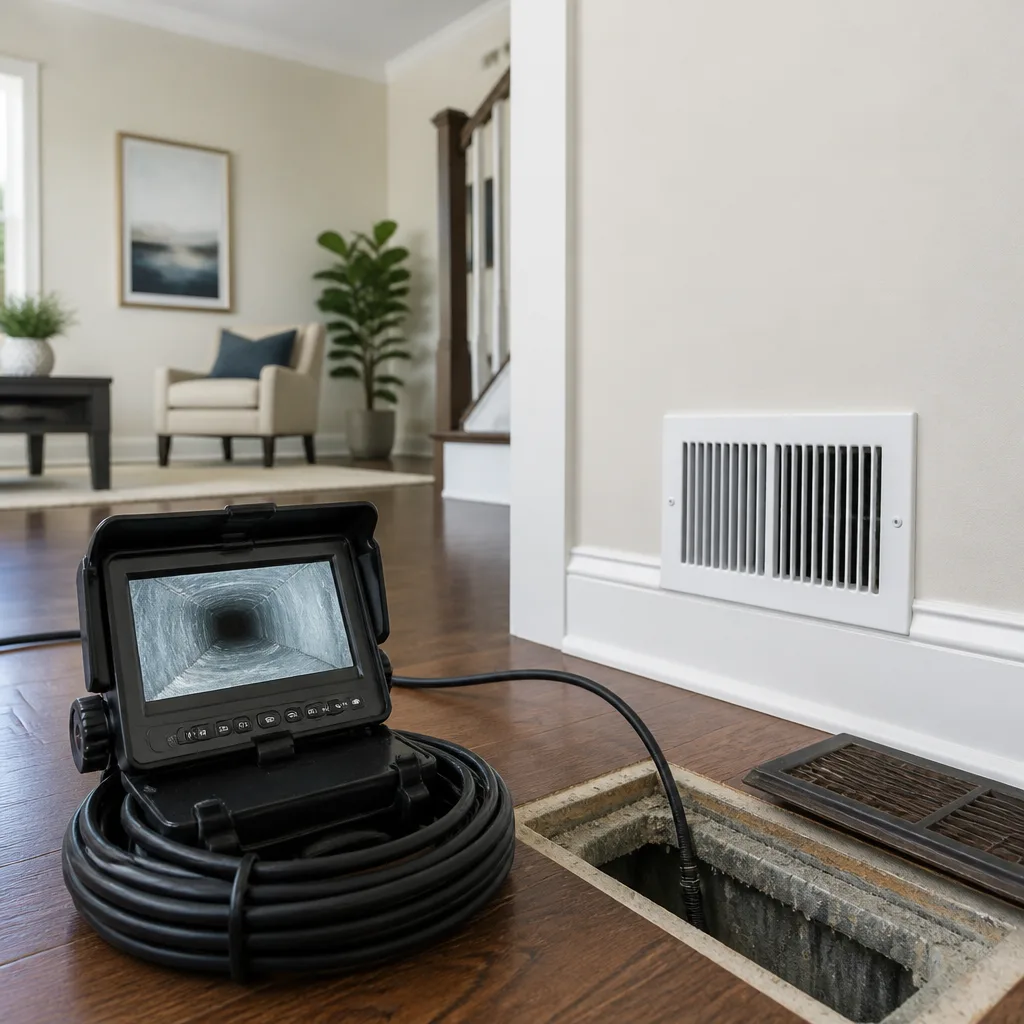 Camera inspection
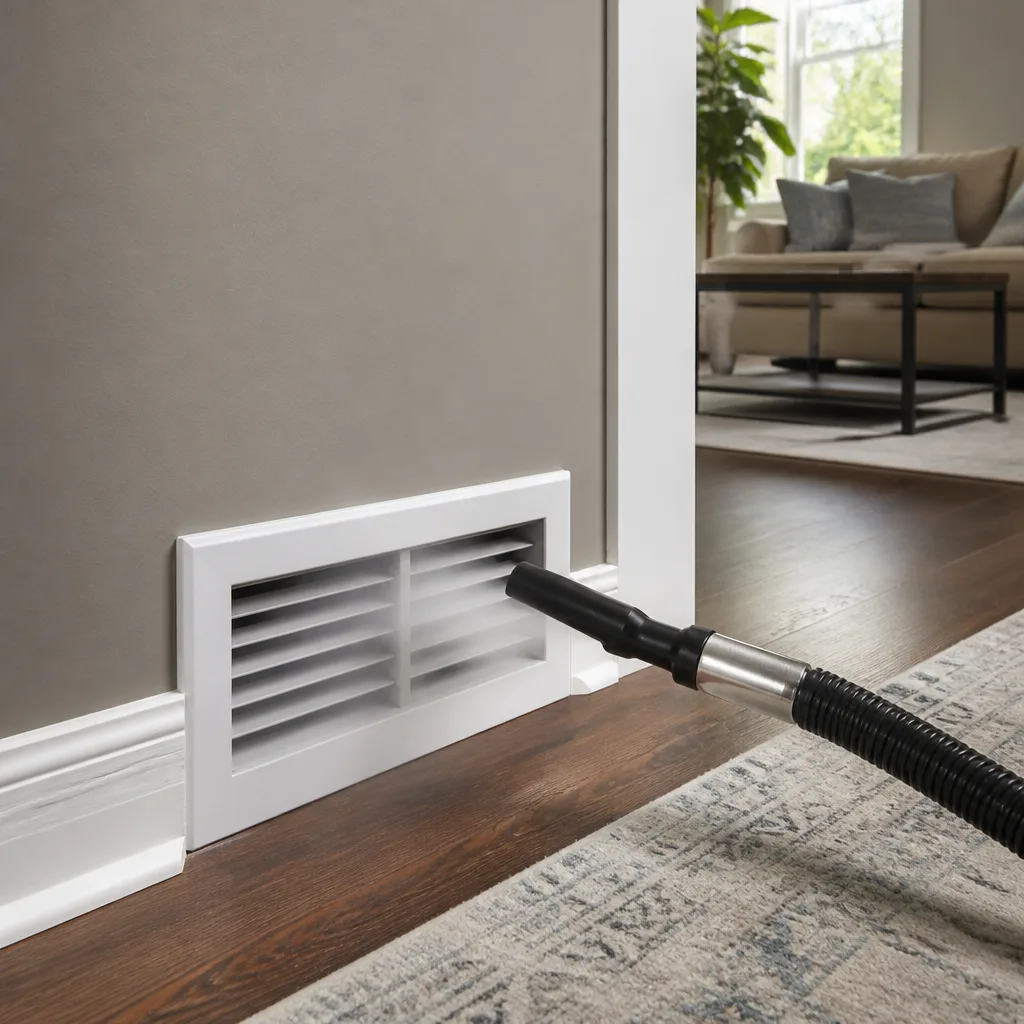 Sanitizing & deodorizing
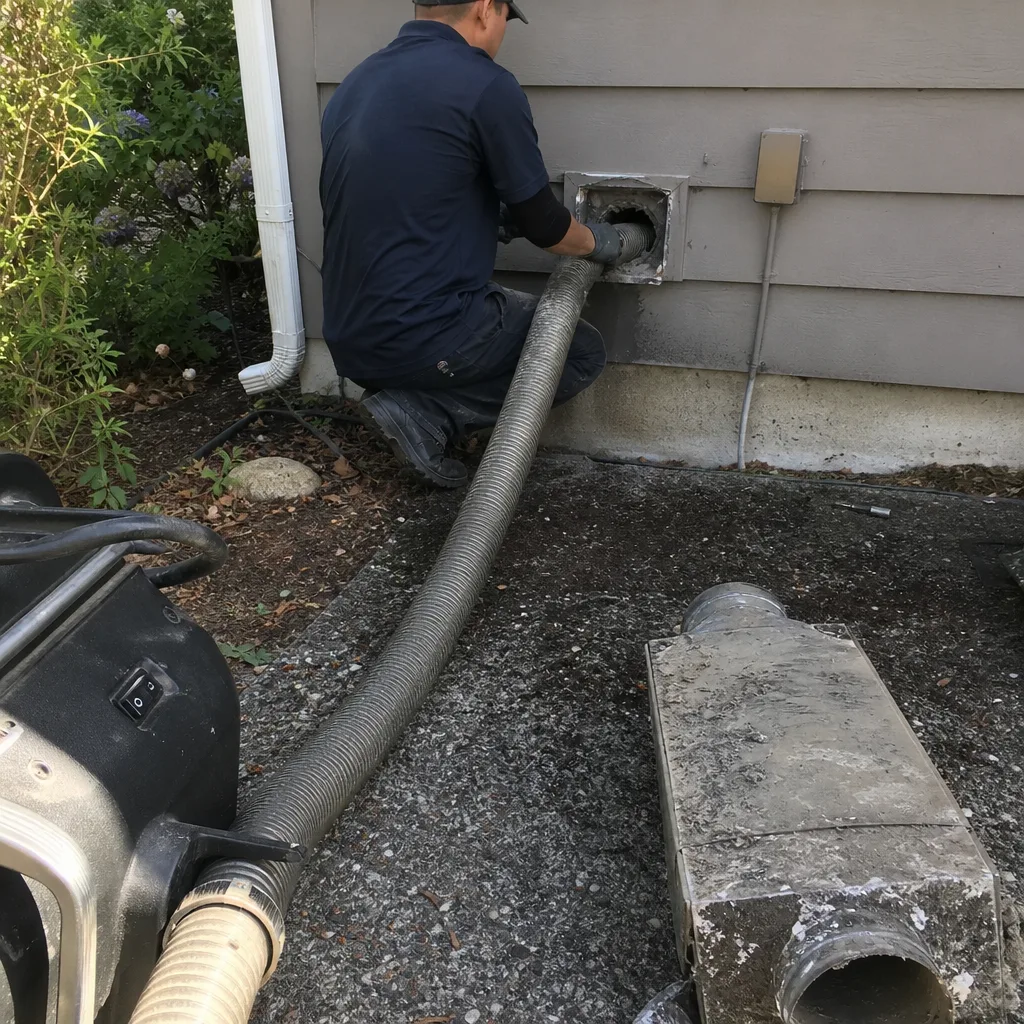
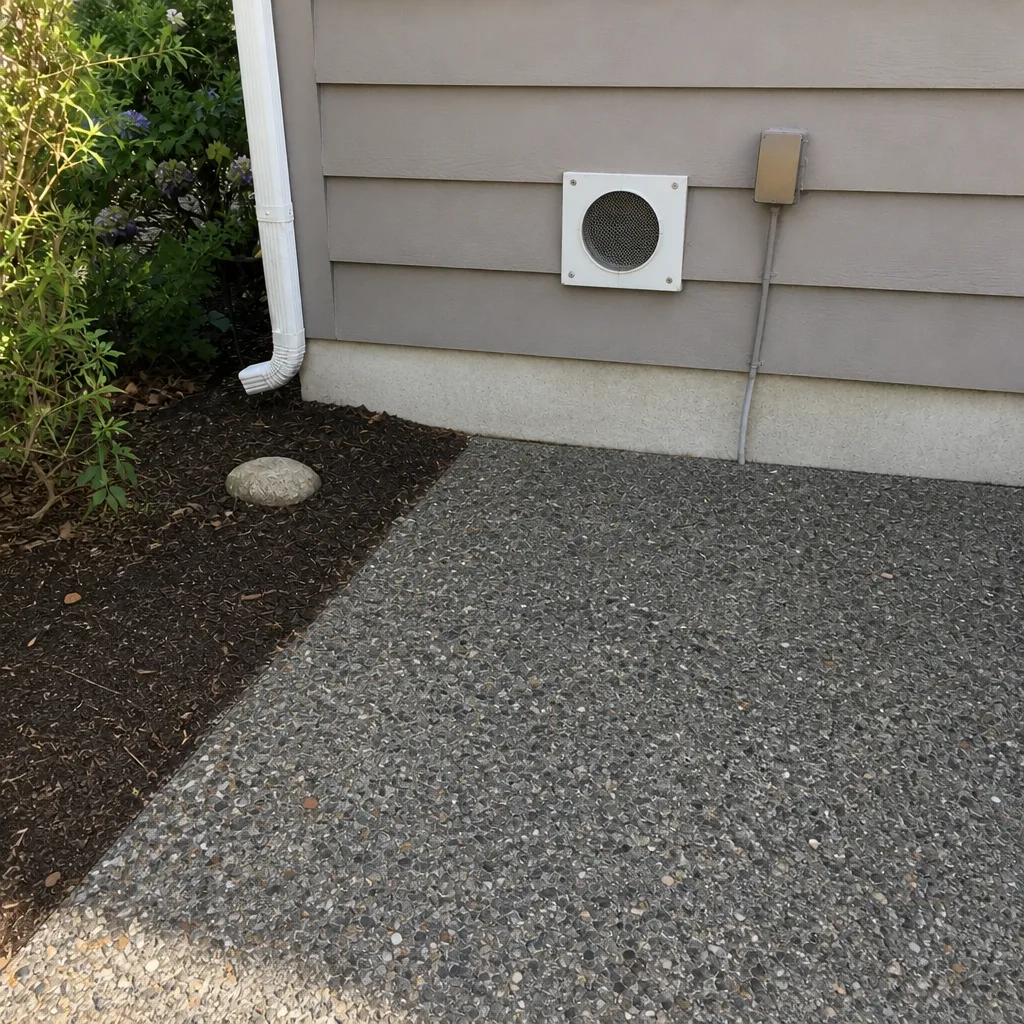
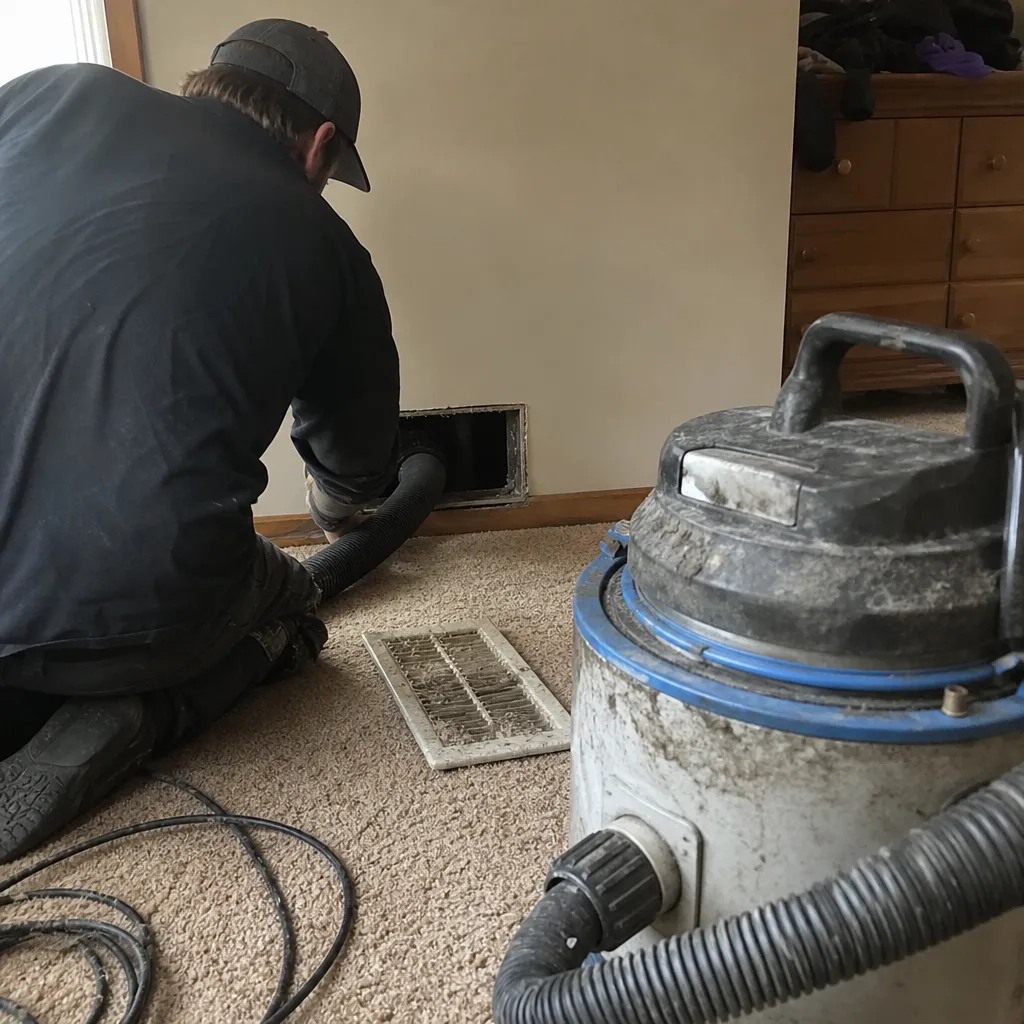
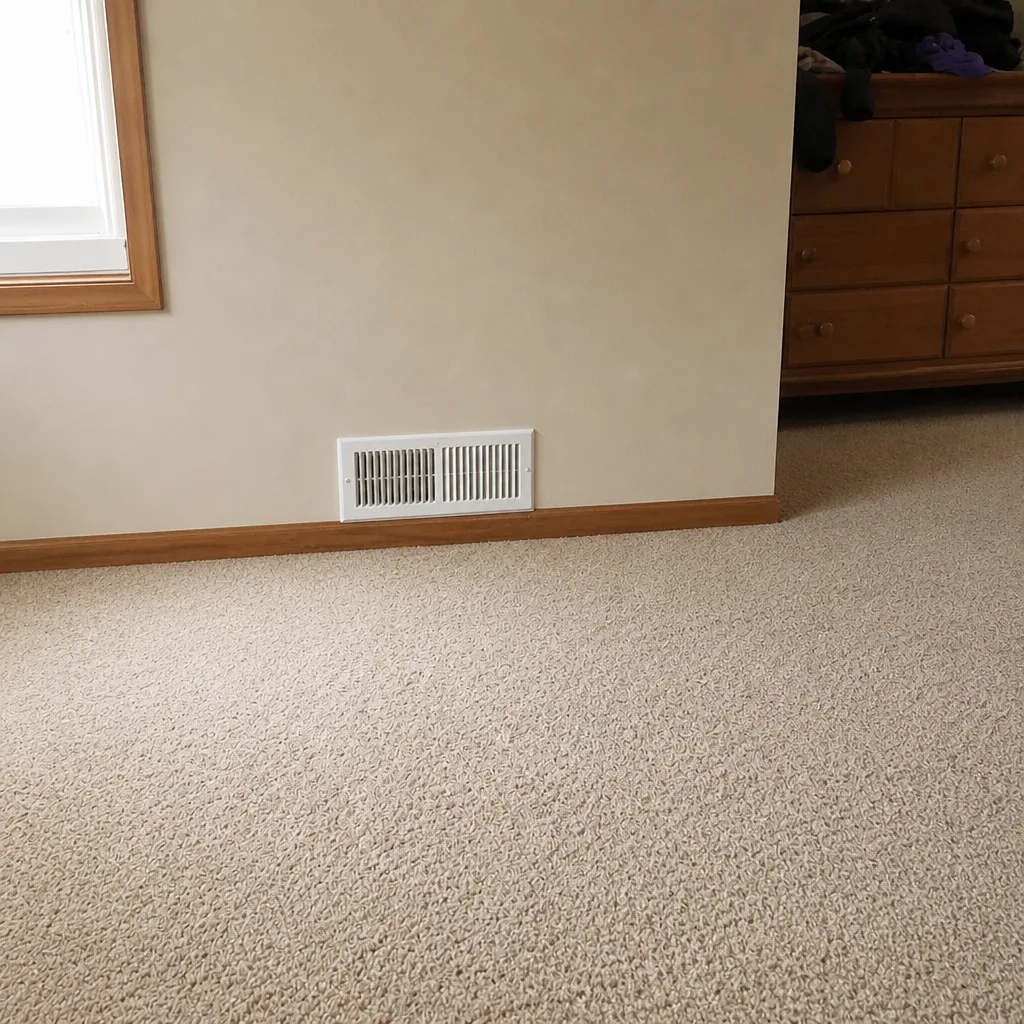
Whole-system duct and dryer vent check with before-and-after photos - you see exactly what came out of your vents
That "$99 whole-house special" is a bait ad - the real number appears once they are in your hallway, or the "clean" is a shop-vac at the register. We photograph the inside of your ducts before and after instead.
Air Duct Cleaning Warning Signs: An Everett Homeowner’s Reference Guide
Visible dust at the register is the last warning sign, not the first. By the time debris is shedding into your living space, restriction and contamination inside the duct system have usually been building for months, and the earlier indicators were right in front of you the whole time. In Everett, where many homes sit over crawlspaces and run flex duct through cool, damp spaces, those early signals tend to show up in how your heating system behaves rather than in what you can see. This guide walks through the performance metrics, odors, airflow differences and filter patterns that tell you the ducts need attention long before dust appears on the vent cover.
Quick Answer
The earliest warning signs of dirty or restricted ducts in an Everett home are usually performance-based: longer heating cycles than last season, filters loading faster than their rated interval, uneven airflow between rooms, and a musty or stale smell that returns after cleaning the registers. Visible dust at the vents is a late-stage signal, not an early one. If two or more of these signs show up at the same time, a camera inspection of the duct interior will tell you what’s actually happening inside the system.
Styles & brands we work with
- Whole-home duct cleaning
- Dryer vent cleaning
- Camera inspection
- Sanitizing & deodorizing
Table of Contents
- Runtime Escalation: The Earliest Indicator
- Odor Mapping: Musty, Combustion, or Rodent
- Differential Airflow Between Rooms
- Filter Loading Rate as a Diagnostic
- Post-Renovation and Crawlspace Warning Signs
- When the Problem Is Repair, Not Cleaning
- Common Mistakes to Avoid
- When to Call a Professional
Runtime Escalation: The Earliest Indicator
The single most overlooked warning sign is how long your heating system runs to reach the same temperature it hit easily last winter. A system with clean, unobstructed ducts cycles on, reaches the setpoint, and shuts off within a predictable window. When debris accumulates on duct interior walls or clogs a branch, airflow drops, the heat exchanger can’t move its heat into the home as efficiently, and the system runs longer to satisfy the thermostat. That’s a restriction signal, and it shows up months before any dust reaches a register.
You don’t need special equipment to track this. Here’s how to build a simple baseline over a season:
- On a cold morning, note the outdoor temperature and the time it takes from calling for heat to the system shutting off.
- Write it down. Do the same on several similar mornings spaced a few weeks apart.
- Compare like with like. A day that’s ten degrees colder should always run longer, so match the outdoor conditions as closely as you can.
- Watch for a steady creep. If the same outdoor temperature now takes noticeably more runtime than it did at the start of the season, something in the distribution side is restricting airflow.
We’ve seen this pattern many times in Everett homes that heat with forced air through older ductwork. It’s not a thermostat problem and it’s not usually a furnace problem. More often it’s a duct system that’s carrying less air than it used to because the interior has loaded up with debris or a branch has partially collapsed. The runtime number is the friendly early warning. The dust at the register is the alarm that goes off much later.
One caveat: runtime also creeps up when a filter is overdue or a blower is failing, so this sign points you toward an inspection rather than naming a single cause. The next sections help you narrow it down.
Odor Mapping: Musty, Combustion, or Rodent
Smell is a diagnostic tool if you know how to read it. Different odors point to different problems inside the duct system, and each calls for a different response. The three you’ll run into most in Everett are musty biofilm, combustion odor, and rodent activity, and they don’t mean the same thing at all.
Musty, damp, or “basement” odor
This is the moisture-driven smell. In Everett homes with duct runs through or near crawlspaces, cool damp air can condense on duct surfaces during the shoulder seasons, and that moisture feeds microbial growth on the duct interior. The give-away is that the smell is strongest when the system first starts up, then fades as air moves, and it comes back in damp weather. A properly sealed and cleaned system with good filtration addresses the source. Persistent mustiness paired with visible moisture is worth a closer look at the crawlspace itself.
Combustion or “hot metal” odor
A faint burnt or oily smell when the heat comes on deserves attention. It can be dust burning off a heat exchanger at the start of the season, which fades within a run or two. But if the smell persists, or smells sharper than dust, treat it as a safety question and call a qualified HVAC technician to inspect the heat exchanger and combustion side. Duct cleaning is not the right first move for a combustion odor, and we’ll tell you that plainly if you describe it on the phone.
Rodent odor: sharp, ammonia-like, or urine-sour
A sharp, animal smell that’s worse in certain rooms points to rodents using duct runs or crawlspace penetrations. Rodent activity leaves contamination that ordinary cleaning won’t resolve, and it also means there’s a breach to find and seal. This is where air duct cleaning done with the right containment matters, because you don’t want dislodged debris and contamination recirculating into the living space while the work is underway.
Our approach to all three is the same: identify the source before touching the system, then use equipment that contains what’s disturbed. A Nikro HEPA vacuum holds the system under negative pressure during the job so debris and contaminants are trapped rather than blown into your rooms. Camera inspection through a Rotobrush system lets us see the duct interior and confirm what we’re dealing with, and it lets you see it too.
Differential Airflow Between Rooms
If one room in your Everett home is always the cold one, or the register there barely moves a tissue, that’s a duct-level clue. Uneven airflow between rooms usually comes down to one of four things: a blocked branch, a disconnected or leaking joint, a damper that’s partly closed, or a run that’s longer and more restrictive than the rest of the system. You can narrow it down yourself with nothing more than a smartphone.
Many phones include a rudimentary air velocity sensor, and inexpensive anemometer apps use it to estimate airflow. It won’t match a calibrated instrument, but it’s consistent enough to compare one register against another. Here’s a room-by-room method:
- Set the system to fan-only so it runs steadily without cycling on and off.
- Hold the phone at the same distance from each supply register and record the reading. Take two readings per register and average them.
- Write the numbers down on a simple floor plan sketch. You’re looking for outliers, not perfect accuracy.
- A register reading far below its neighbors points to a restriction on that branch. A register reading that’s oddly high can indicate a leak or a disconnected joint letting air escape upstream.
- Repeat the same test at the return grilles. A weak return can starve the whole system and mimic a supply-side problem.
What the numbers do is tell you whether you’re chasing a single-branch problem or a system-wide one. A single weak register often means a physical problem in that branch that repair can fix. Every register reading low points to a system-wide restriction or a failing blower, and that’s a call for a proper inspection.
We’ve seen this method save homeowners from replacing a furnace that was doing its job fine while the ducts quietly starved it of air. The pattern is common enough in older Everett neighborhoods that it’s worth doing before you spend money on equipment.
Filter Loading Rate as a Diagnostic
Your filter interval is a diagnostic readout if you pay attention to it. A filter that’s rated to last a set number of months but is loading up and going gray well before that interval tells you something upstream is shedding more particulate than it used to. That’s a duct-interior signal, and it’s one of the cleanest early warnings you can track.
Here’s what filter behavior usually means:
- Filter lasts about as long as expected: the system is running normally. Nothing to chase.
- Filter loads noticeably faster than its rated interval, repeatedly: the return side is pulling in more debris than the filter can handle, which commonly means duct interior contamination or an open return pulling from an unfinished space.
- Filter loads fastest in spring and fall: pollen and outdoor particulate are entering through an unsealed return or a crawlspace drawing air that should be sealed off.
- Filter looks clean but the system still runs long: restriction may be downstream of the filter, on the supply side. That’s a duct inspection question.
The mistake homeowners make is stepping up to a higher MERV rating to “catch more” without checking why the old filter was loading so fast. A higher-MERV filter is more restrictive, and on a system already short on airflow, that adds to the problem. Upgrading filtration is a good move, but it should follow a duct assessment, not replace one. We work with Honeywell and Aprilaire filtration products and can help match a filter’s rating to what your blower can actually move, after the ducts are sorted out.
Keep a simple log: the date you installed the filter and the date it looked loaded. Three or four entries tell you more about your duct interior than any single visual check ever will.
Post-Renovation and Crawlspace Warning Signs
Certain events in an Everett home should trigger a duct inspection on their own, whether or not you’ve noticed any of the performance signs above. Renovation and crawlspace work both stir up material that finds its way into the duct system, and the ductwork is usually the last thing anyone thinks to check.
Get an inspection after any of these:
- Drywall work. Sanding and cutting drywall produce fine dust that settles into returns and open supply boots during the project. It doesn’t all get picked up by the filter.
- Insulation replacement. Fiberglass or blown-in insulation disturbed in an attic or crawlspace can migrate into duct runs through gaps and penetrations.
- Crawlspace work. Laying a vapor barrier, replacing a joist, or opening up a crawlspace can stir up years of settled debris that then draws into ducts running through that space.
- Roof or exterior work that opened the envelope. Drywall dust and exterior debris often travel together during a larger renovation.
In Everett, crawlspace duct runs are common, and a lot of the housing stock has ductwork that was retrofitted rather than designed in from the start. That combination means crawlspace disturbances carry a higher-than-average risk of loading the ducts. If your renovation is finished and the system is running, a camera inspection now is cheaper than discovering the problem after a season of filter changes that don’t fix anything.
A proper post-renovation cleaning doesn’t just blow the dust along. It uses negative pressure to hold the system while brushing knocks material loose. That’s why we run the Rotobrush brushing system along with Nikro HEPA containment, so what comes off the duct walls gets captured rather than pushed out into the rooms you just painted.
When the Problem Is Repair, Not Cleaning
Not every duct problem is a cleaning problem. Some of the warning signs in this guide point to structural failure, and no amount of cleaning will fix a duct that’s collapsed, disconnected, or breached. Knowing the difference saves you from paying twice.
Signs that point to a structural issue:
- A single register that never gets good airflow no matter the season.
- A whistling or rushing sound at a register or at the air handler.
- Dust settling heavily in one room only.
- Visible sagging or kinked flex duct in an accessible attic or crawlspace.
- A steady, unexplained pressure imbalance between rooms.
These point to a leak, a disconnected joint, or a collapsed section. Camera inspection is how we confirm it. A Rotobrush system lets us look through the duct and see the breach before we commit to any scope of work, so you’re not paying for cleaning on a branch that actually needs repair.
This is where a cleaning-only crew runs out of options. They can brush and vacuum, but if the problem is a broken connection or a failed section, the sign comes back after the first cold snap. Air duct repair handles the structural side: identifying the breach, fixing the connection or section, and then cleaning what’s behind it. One visit, one provider, no tag-teaming between a cleaning company and a separate HVAC contractor. If your system has been cleaned once and the same problem keeps returning, that’s the signal to ask for a repair assessment rather than another cleaning.
Common Mistakes to Avoid
- Judging the ducts by the registers alone. Visible dust at the vent cover is the late signal, not the early one. By the time you see it, restriction and contamination have had months to build. Check runtime, filter load, and airflow before you rely on what’s visible.
- Assuming a gray filter means you need higher filtration. A filter loading faster than its rated interval usually means the ducts are shedding more than the filter can hold. Raising the MERV before the ducts are addressed just adds restriction on top of a restriction problem.
- Writing off a single cold room as poor insulation. In Everett homes with retrofitted ductwork, a room that’s consistently cold is usually a duct issue, not a wall issue. Test the airflow before you spend money on insulation.
- Skipping the inspection after a renovation. Drywall dust, insulation fiber, and crawlspace debris all end up in the ductwork after a project. An inspection is cheap compared to cleaning out a system that’s been running loaded for a season.
- Treating a musty smell as a housekeeping problem. A smell that returns after cleaning the registers is coming from the duct interior or the crawlspace. Masking it doesn’t address the source.
- Hiring on the lowest price without asking what equipment they’ll use. A shop vac and a brush can’t hold a duct system under negative pressure, and can’t verify what they cleaned. Ask about containment and camera inspection before you book.
- Assuming the ducts have to be replaced when a room loses airflow. Most single-branch airflow problems are repairable connections or blocked sections, not a full system replacement. Get a camera inspection before you consider the bigger spend.
See the difference
 Before
 After
 Before
 After
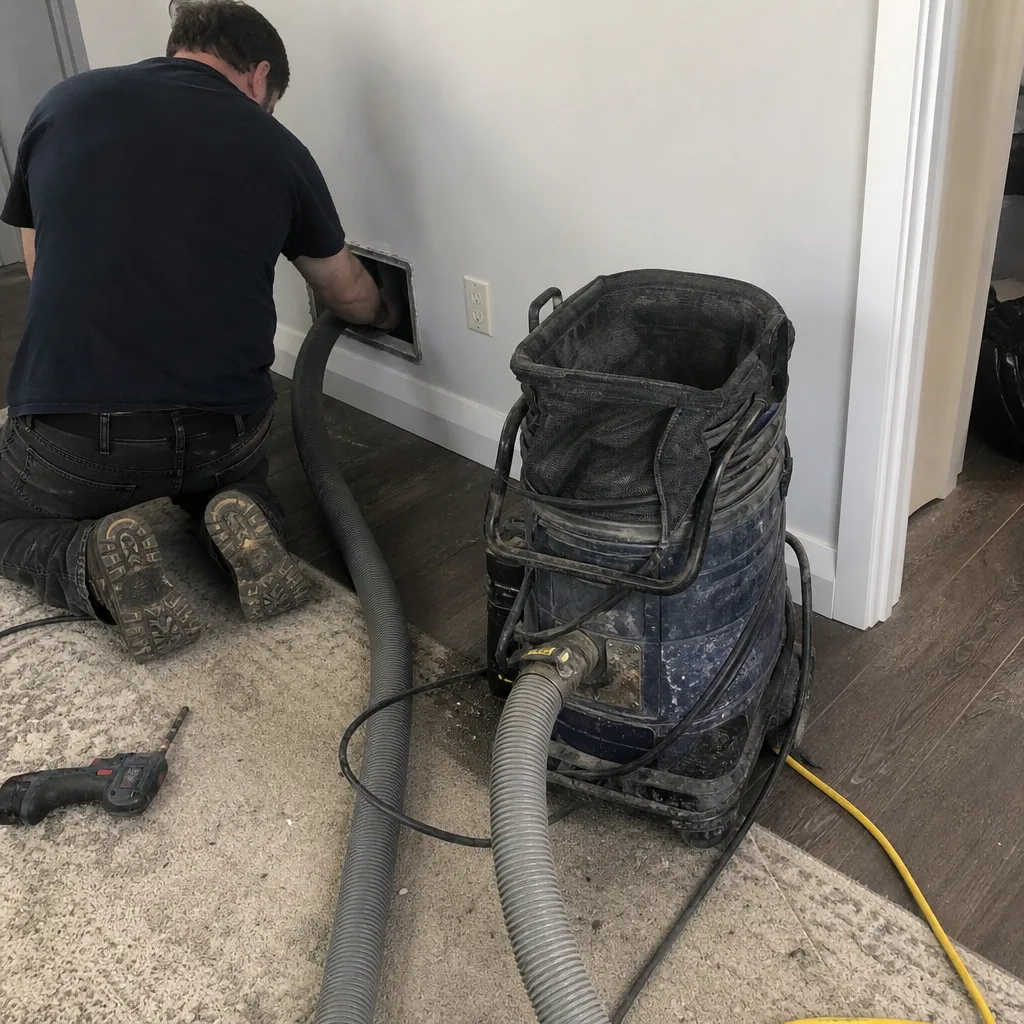 Before
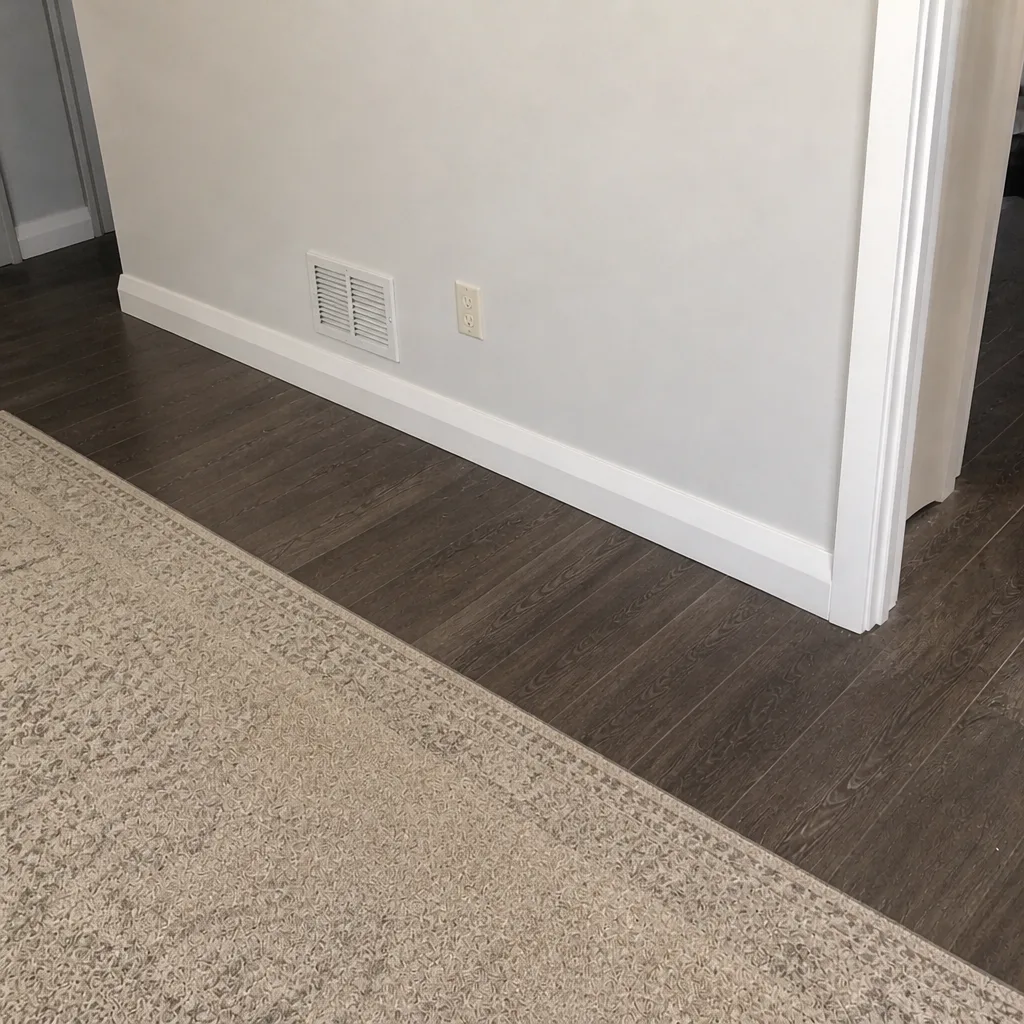 After
When to Call a Professional
Some warning signs are worth acting on right away. Call us if a comb-like or burning smell persists when the heat runs, if you’ve had rodent activity in the crawlspace or attic, if a renovation just wrapped up and dust is showing up at the registers, if a filter is loading well before its rated interval, or if one room has lost airflow and it’s not coming back. If a system has been cleaned recently and the same signs have returned, that’s a repair assessment, not another cleaning.
Duct Cleaning Everett offers free estimates in Everett. We’ll run a camera through the system and show you what’s there before we recommend any work. Call (833) 991-7936. We answer 24/7. Fast dispatch from 7am to 7pm, Sunday through Friday. A call outside dispatch hours is booked into the next opening, Sunday through Friday, 7am to 7pm.
Frequently Asked Questions
The first sign is usually a change in HVAC performance: longer heating cycles at the same outdoor temperature, filters loading faster than their rated interval, or one room losing airflow before the others. Visible dust at the register comes later, after the interior has been loaded up for months. If you notice two or more of these together, a camera inspection will confirm what’s happening. Call (833) 991-7936 for an exact quote. Estimates are free.
Most jobs come in around $350 to $800 for a whole-home system, and the range depends on how many branches there are, how accessible the ductwork is, and whether repair work is needed alongside cleaning. We set one flat price per system before work starts, so there’s no per-vent pricing and no surprise line items once we’re on site. Call (833) 991-7936 for an exact quote. Estimates are free.
Cheap quotes usually reflect cheaper equipment and a shorter visit. A shop vac and a brush can’t put a duct system under negative pressure, so dislodged debris ends up back in the house, and there’s no camera inspection to verify the work. We run Nikro HEPA containment and a Rotobrush camera system, and we show you before-and-after photos of your own ducts. It’s a different job, and the price reflects that. Call (833) 991-7936 for an exact quote. Estimates are free.
Most homes don’t need it on a fixed schedule. The right interval depends on the signs in this guide: how fast filters load, whether there’s been a renovation or crawlspace work, and whether anyone in the home has ongoing respiratory concerns. We’d rather you call when the signs show up than clean on a calendar. Call (833) 991-7936 for an exact quote. Estimates are free.
Yes. Restricted airflow from debris buildup or a blocked branch means the system moves less air and runs longer to reach the setpoint. It’s the same effect a dirty filter produces, just spread across the whole system rather than concentrated at one filter slot. If runtime has crept up over a season at the same outdoor temperatures, that’s the pattern to watch. Call (833) 991-7936 for an exact quote. Estimates are free.
You should see it. A camera inspection through the Rotobrush system lets us run a lens through the ductwork before and after, and you see the footage. Before-and-after photos of your own system are part of the job, not a marketing add-on. If a crew can’t show you what’s inside the ducts, the work is hard to verify. Call (833) 991-7936 for an exact quote. Estimates are free.
Not necessarily. A musty smell usually points to moisture and microbial growth on the duct interior, and cleaning with proper containment often resolves it. We don’t offer mold remediation certification services, and if the assessment turns up a mold problem that goes beyond cleaning, we’ll tell you and point you toward the right specialist. Call (833) 991-7936 for an exact quote. Estimates are free.
We do both, along with air duct repair. dryer vent cleaning is a safety service, not a maintenance upsell. A restricted dryer vent is a fire risk, and it shows many of the same symptoms as restricted ductwork: longer dry times, heat that builds up, and lint collecting at the outside hood. Call (833) 991-7936 for an exact quote. Estimates are free.
The Bottom Line
The warning signs worth watching in an Everett home are mostly invisible at the register. Runtime that creeps up, filters that load too fast, a room that loses airflow, and a smell that keeps coming back are the early indicators. Visible dust comes late. When you see those signals, get a camera inspection rather than guessing, and make sure whoever comes out can do repair as well as cleaning. If the ducts have been cleaned and the signs return, it’s a repair problem. Duct Cleaning Everett has been serving Everett, and we’d rather show you what’s in the ducts than tell you what to think.
We handle air duct cleaning, dryer vent cleaning, and air duct repair across the area, and we’ve built our equipment list around the harder jobs: Rotobrush for camera-verified cleaning, Nikro HEPA for real containment, and Abatement Technologies for tougher air quality situations. If you’re unsure whether your signs add up, that’s exactly what the free estimate is for.
Call (833) 991-7936. We answer 24/7. Fast dispatch from 7am to 7pm, Sunday through Friday. A call outside dispatch hours is booked into the next opening, Sunday through Friday, 7am to 7pm.
Written by the team at Duct Cleaning Everett, serving Everett.