
Emergency Air Duct Cleaning Near Me: What Everett Homeowners Should Do First
If a mouse nest turns up in your ductwork, the worst thing you can do is run the HVAC to air out the smell. That single move aerosolizes rodent particulate through every supply register in the house, and what was a contained problem becomes a whole-home one. Most duct emergencies aren’t solved by calling a cleaner fast. They’re solved by shutting the system down and assessing the contamination type before anyone touches a brush. Here’s the order that actually works for Everett homeowners.
If you’d rather not work through this yourself, call (833) 991-7936. We answer 24/7. Fast dispatch from 7am to 7pm, Sunday through Friday.
What Should You Do in the First Hour of a Duct Emergency?
Turn the HVAC system off at the thermostat first. Then seal the supply registers in the affected rooms with painter’s tape and plastic sheeting. Leave the return grilles alone until a technician assesses them. That’s the short answer, and it applies whether the trigger was a fire, a rodent infestation, or a sewage backup near the duct runs.
Here’s the reasoning, because the “why” matters more than the “what.” A forced-air system is a recirculation loop. Anything loose inside the ducts gets pulled through the blower and pushed out every register in the house within minutes of the system running. Sealing supply registers slows that spread. Turning the system off stops it.
A few practical notes for Everett homes:
- Use painter’s tape, not duct tape. Duct tape leaves adhesive residue that collects dust and is a nuisance to remove later.
- Don’t block the return air grille if it’s the only return serving the system. A starved system can overheat the blower.
- If you smell smoke, shut off the furnace breaker at the panel as well as the thermostat. Gas and electrical safety is a licensed-trade matter, so treat it that way.
- Take a photo of the thermostat setting and the time you shut it off. That timestamp becomes part of the documentation trail.
If you’d rather have a trained eye on this than go it alone, our air duct cleaning team can walk through the shutdown with you over the phone before anyone rolls a truck.
How Do You Triage the Type of Duct Emergency?
Not every duct emergency is the same job, and calling the wrong first responder wastes the most valuable hours. Smoke and fire residue, biological contamination, and water intrusion each demand a different sequence and different equipment. Identify which one you’re dealing with before you authorize any work.
Smoke and fire residue
Soot particles are microscopic and settle into every crevice of the duct lining. Standard cleaning equipment dislodges them without containing them, which is why a remediation-grade setup matters. Negative-pressure containment with HEPA filtration is the baseline for this category. If a fire occurred anywhere in the home, your insurer should be looped in before cleaning begins, because the scope of the claim depends on how the residue is characterized.
Biological contamination (rodents, birds, pests)
Rodent nests, droppings, and dead animals in ductwork are a containment problem first and a cleaning problem second. The contamination needs to be trapped, not blown around. This is where consumer-grade vacuums and shop vacs fall short. You need HEPA filtration that captures particles at the source.
Water intrusion near ductwork
Water that reaches duct insulation creates a moisture problem that cleaning alone won’t solve. If duct sections are saturated or show mold growth, cleaning without repair or replacement just spreads the problem downstream. This is where duct inspection and repair scope matters, not just cleaning. In Everett’s wet winters, a slow roof or plumbing leak can saturate duct insulation for weeks before anyone notices.
If you’re not sure which category you’re in, call (833) 991-7936 and describe what you’re seeing. We can help you sort it out before a truck is dispatched.
Why Standard Cleaning Equipment Isn’t Enough for a Real Emergency
A shop vac and a brush work fine for routine dust. They fall short for smoke residue, rodent contamination, and sewage exposure, because the equipment doesn’t contain what it dislodges. That’s the difference between a cleaning and a remediation-grade job.
Here’s what professional-grade looks like in practice:
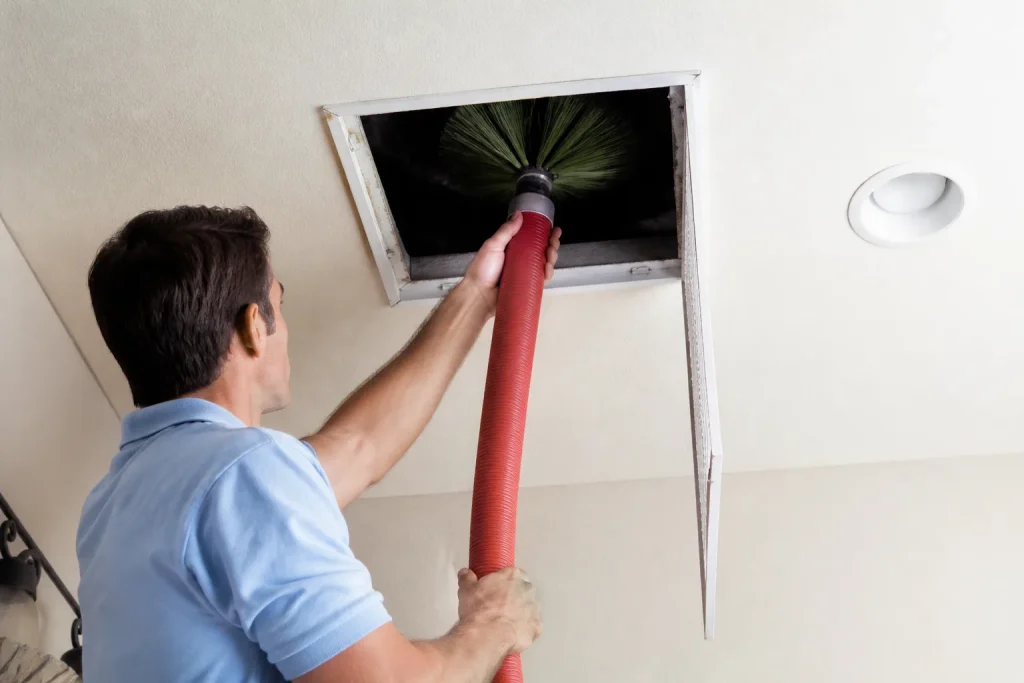
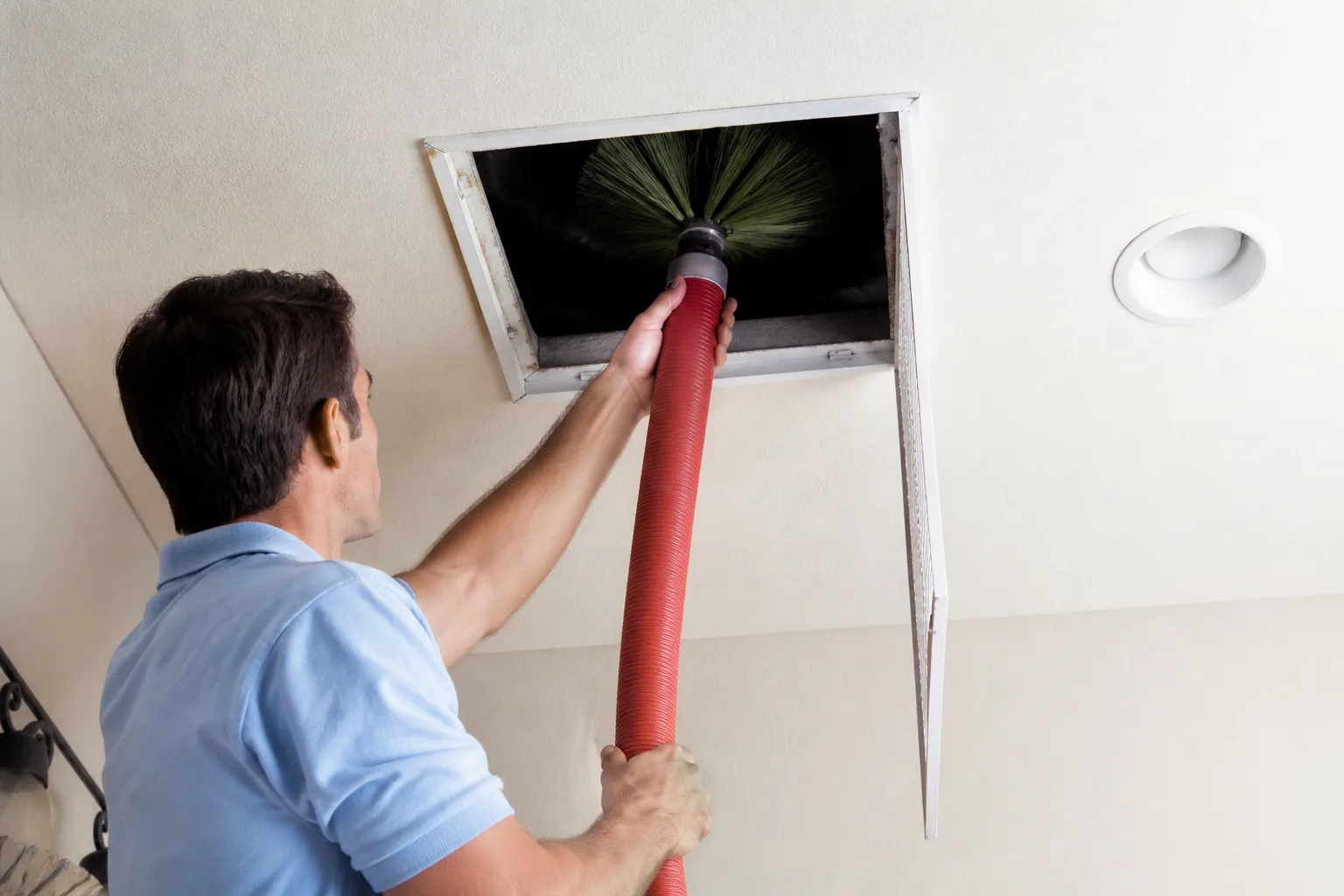
- Rotobrush systems combine mechanical brushing with real-time camera inspection, so the cleaning result is visible on screen rather than taken on faith. You see what came out and what the duct looks like after.
- Nikro HEPA vacuum equipment uses negative-pressure containment to trap dislodged debris at the source. The same technology used in professional remediation work, not consumer suction.
- Abatement Technologies equipment handles contamination-level air quality situations that go beyond routine dust removal.
- Duct repair capability matters when the emergency also involves a breach, collapsed section, or failed connection. Cleaning alone can’t fix a structural problem.
That last point is the one most Everett homeowners learn the hard way. A duct with a failed connection pulls attic or crawlspace air into the system. Cleaning it just means the same dirty air keeps coming in. We repair what other crews walk past, because a band-aid fix on a broken duct run doesn’t hold.
The same professional-grade approach applies whether we’re handling ducts or clearing a clogged dryer vent. If you’re scheduling a visit for one system, it’s worth asking about the other. Our dryer vent cleaning service uses the same camera-verified process, and a clogged dryer vent is a fire risk that doesn’t announce itself until it does.
What Documentation Should You Gather Before the Crew Arrives?
Gather photos, the HVAC system’s age, and a written timeline of the event before any technician arrives. This documentation affects both the cleaning scope and any insurance claim, and it’s much easier to compile while the details are fresh than three days later.
What to collect:
- Photos of the affected area. The registers, the thermostat, any visible contamination, any water staining. Shots at multiple angles with a phone timestamp are ideal.
- The HVAC system’s install date or approximate age. This affects which components are worth cleaning versus replacing, and insurers often ask.
- A written event timeline. When the fire happened, when the rodent problem was first noticed, when the water intrusion started. Dates matter to adjusters.
- Any contractor documentation already on file. Prior service records, warranty paperwork, the name of whoever serviced the system last.
- Your insurance policy number and adjuster contact. Keep these on hand before authorizing any work.
One thing to sort out early: whether your insurer wants to be looped in before work is authorized. Most homeowners’ policies cover sudden and accidental damage but not gradual deterioration. If the problem is a slow leak that’s been developing for months, the adjuster needs to know that before a scope of work is written. Ask your adjuster directly rather than guessing, and get authorization in writing before you sign anything.
What should a contractor provide for a claim? At minimum, a written scope of work, before-and-after photos of the ducts, a description of equipment used, and a written estimate with line items. If you need photos for a claim, tell the crew ahead of time so they capture the right shots.
When Should You Call a Pro Instead of Handling It Yourself?
Call a pro the moment contamination has spread beyond a single room, or the moment you’re unsure what you’re looking at. Rodent nests, smoke residue, and any sewage exposure are three situations where DIY work can make the problem measurably worse. That’s not a sales pitch. It’s how contamination behaves.
Call us when:
- You smell smoke, sewage, or rodent odor through multiple registers.
- You’ve found droppings, nesting material, or a dead animal in the ductwork.
- The duct system shows visible damage (collapsed sections, disconnected runs, torn insulation).
- You want the cleaning verified on camera rather than taken on faith.
- You’re preparing an insurance claim and need documentation.
We answer 24/7. Fast dispatch from 7am to 7pm, Sunday through Friday. We’re closed Saturday. A call outside dispatch hours is booked into the next opening, Sunday through Friday, 7am to 7pm.
Duct Cleaning Everett has served Everett since 2012, and in that time we’ve been called to jobs where a first attempt with a shop vac made a contained problem into a whole-home one. That’s the pattern worth avoiding. When you call, the price is set per job by the written estimate. One flat price per system, agreed before work starts. No per-vent pricing, no bait-and-switch coupon.
Related services in Everett: dryer vent cleaning when the problem is a clogged exhaust, and air duct cleaning when the scope is a full system.
The Bottom Line
Emergency duct work is a containment problem before it’s a cleaning problem. Turn the system off, seal the supply registers, identify whether you’re dealing with smoke, biological contamination, or water, and document everything before authorizing work. The wrong first move can turn a contained issue into a whole-home one. The right equipment, matched to the contamination type, is what actually resolves it.
If you’re in Duct Cleaning Everett territory and need help, we offer free estimates. Call (833) 991-7936.
Frequently Asked Questions
The cost depends on the contamination type and system size, so it’s set per job by the written estimate after inspection. Remediation-grade work for smoke or rodent contamination runs higher than routine cleaning because the equipment and containment are different. Call (833) 991-7936 for an exact quote. Estimates are free.
Cheap quotes usually reflect consumer-grade equipment and no containment. A shop vac doesn’t trap what it dislodges, so contamination can spread further into the system during “cleaning.” For a true emergency, that’s the opposite of what you want. Ask any contractor what equipment they’ll use before you compare prices.
Camera inspection is the clearest proof. Rotobrush systems let the technician show you before-and-after footage of your own ducts, so the result is visible rather than assumed. Ask for photos before a job starts and after it’s completed.
For most Everett homes, routine cleaning every few years is enough. But contamination events (fire, rodents, water intrusion) are a different matter entirely, and require remediation-grade work regardless of when the last cleaning happened. If you’re unsure which category you’re in, describe the situation and we’ll tell you honestly.
Written by the team at Duct Cleaning Everett, serving Everett since 2012.
Need Air Duct Cleaning Help?
Call Duct Cleaning Everett - licensed & insured, here with fast help in Everett.
(833) 991-7936